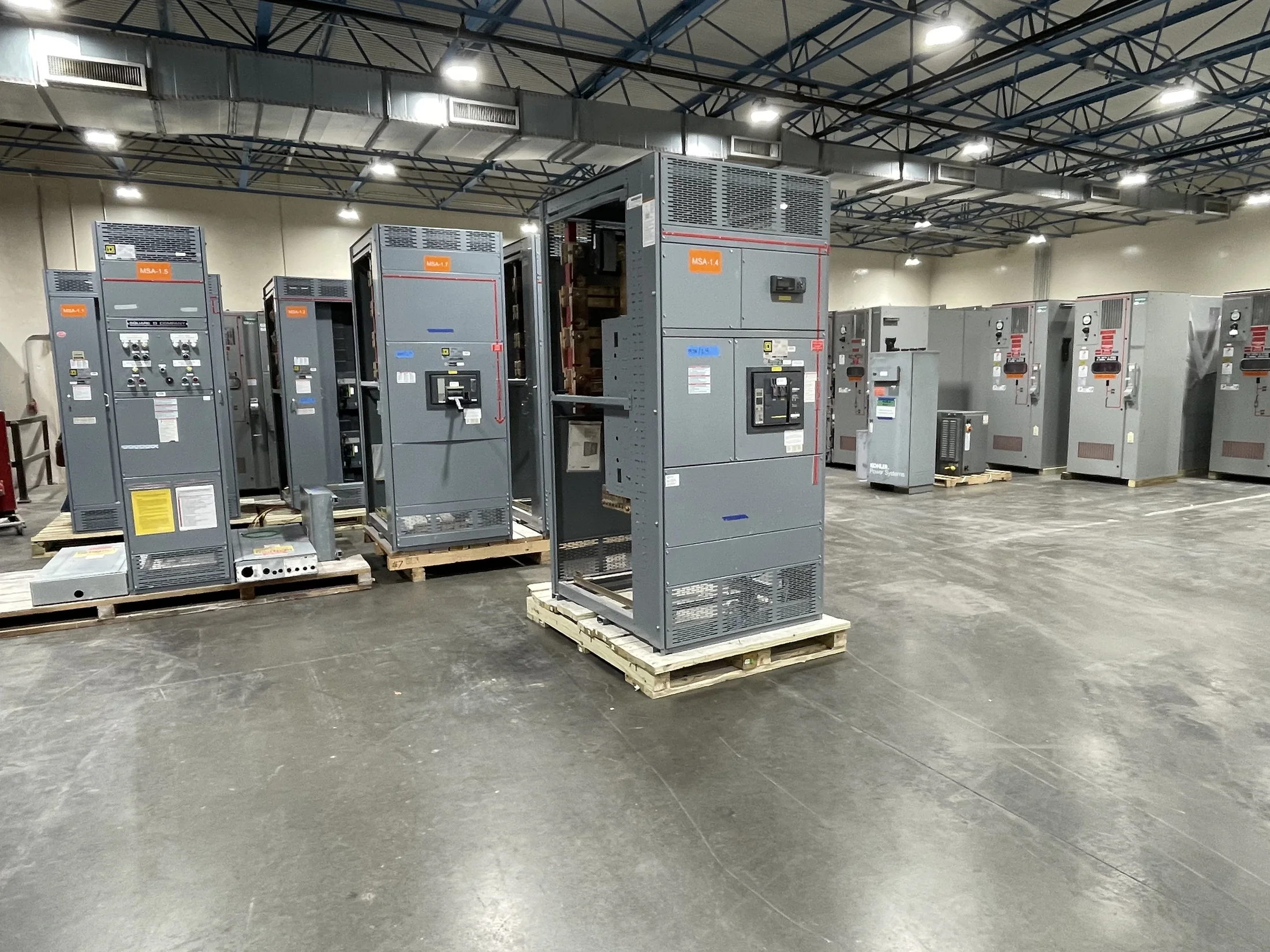
Map the Power Path Before Selecting Equipment
A medical office UPS distribution design begins with the source-to-load path: service or generator, UPS input, UPS output, bypass arrangement, and the panels serving selected equipment. Identify which loads require conditioned or backed-up power and which remain on normal distribution. This boundary guides equipment scope and avoids treating every receptacle as a critical load.
For a Kettering project, gather current one-line diagrams, service characteristics, available fault-current information, and planned loads before specifying a switchboard or panel connection. Confirm existing conditions in the field. The responsible engineer should reconcile the proposed arrangement with building systems, utility requirements, and the authority having jurisdiction (AHJ).
Define the UPS Input Connection
The UPS input feeder supplies the UPS rectifier or other specified input section, and its source may be utility, generator-backed distribution, or a coordinated combination. Confirm voltage, phase, frequency, conductor and raceway approach, grounding method, overcurrent protection, and the UPS manufacturer's input requirements. Input and bypass sources may differ; do not assume they share a feeder.
Equipment supplying this connection must be coordinated with the UPS nameplate data and project study results. Obtain the specified input current, inrush or charging characteristics where applicable, and required protective-device details. Confirm whether the design calls for a dedicated feeder breaker, service-rated equipment, or another arrangement; these are project decisions, not automatic features.
Coordinate the UPS Output and Critical Loads
The UPS output commonly feeds a distribution section or dedicated panel serving designated critical loads. List each load, its voltage and phase, operating profile, and any motor, imaging, laboratory, or other nonlinear characteristics relevant to the design. Confirm expected future capacity and which loads may start or operate together, rather than sizing from connected load alone.
Output fault-current contribution and protective-device coordination require attention because UPS behavior can differ from utility-source behavior. The engineer should review manufacturer data, grounding and neutral arrangements, and the intended transfer or fault-clearing scheme. Define whether output distribution is integral to the UPS package or supplied as separate switchgear, switchboard, or panel equipment.
Choose a Bypass Arrangement That Fits Operations
A bypass path can support load continuity during UPS maintenance or a UPS condition that requires bypass, but its topology and operating sequence must be explicit. Distinguish static bypass within the UPS from an external maintenance bypass assembly. Confirm source selection, switching steps, interlocking expectations, and whether bypass and normal input use the same source.
The design team should review how each operating state affects the load, including maintenance, transfer, and return to normal operation. Confirm the bypass equipment's voltage, current, interrupting and withstand requirements, and enclosure or access constraints from project documents. Do not presume a particular bypass configuration is included in a distribution lineup.
Keep Dedicated Panels Purposeful and Identifiable
Dedicated UPS panels can make critical circuits easier to identify, maintain, and expand, provided panel schedules and labeling match the actual design. Separate loads according to operational need, not simply room location. Confirm branch-circuit quantities, pole requirements, spare-space expectations, and whether critical loads require separate panels or can be grouped.
Coordinate panel locations with electrical rooms, feeder routes, working clearances, and any infection-control or clinical planning requirements set by the project. Confirm voltage, bus and main arrangement, enclosure, and available fault-current rating with the responsible engineer. Circuit directory language should be useful to facilities staff and consistent with drawings and field identification.
Separate Equipment Standards by Function
The appropriate equipment category depends on voltage, construction, and application. UL 891 applies to low-voltage switchboards; it is not a medium- or high-voltage standard. UL 1558 covers low-voltage switchgear. Medium-voltage equipment is a separate category with different design and specification considerations, so identify the actual system voltage first.
A project may combine a UPS, external bypass, switchboard or switchgear, and dedicated panels, each with its own scope and applicable requirements. Specify which assemblies are furnished and how they interface; do not infer that one standard applies to every component. The engineer and AHJ should confirm required standards, ratings, and installation details.
Provide Quote-Ready Project Information
A useful quotation package includes the one-line diagram, load and panel schedules, service voltage, source arrangement, available fault current, and the UPS manufacturer's input, output, and bypass data. Include required feeder and breaker details, enclosure and access constraints, drawings, and the project schedule. Mark open items so assumptions can be reviewed before equipment is released.
Also identify the equipment boundaries: what is furnished by the UPS vendor, electrical contractor, and distribution-equipment manufacturer. State whether the request covers input distribution, output distribution, external bypass, dedicated panels, or a coordinated combination. We build new equipment with American components and custom fabrication; clear scope supports a practical review of lead time and shipping.
Coordinate Installation and Long-Term Service
Before release, compare equipment dimensions and connection points with the room layout, conduit plan, cable bending space, lifting route, and access for maintenance. Confirm any project-specific seismic, environmental, labeling, or arc-flash documentation requirements. These details can affect fabrication and installation planning, but must be stated and verified for the particular project.
For Kettering facilities, review the final design with the responsible electrical engineer, utility where service coordination is involved, and AHJ as applicable. Our U.S.-built equipment can be custom fabricated and shipped nationwide, including to Ohio. Confirm the delivery sequence, unloading responsibility, and field connection scope with the project team.