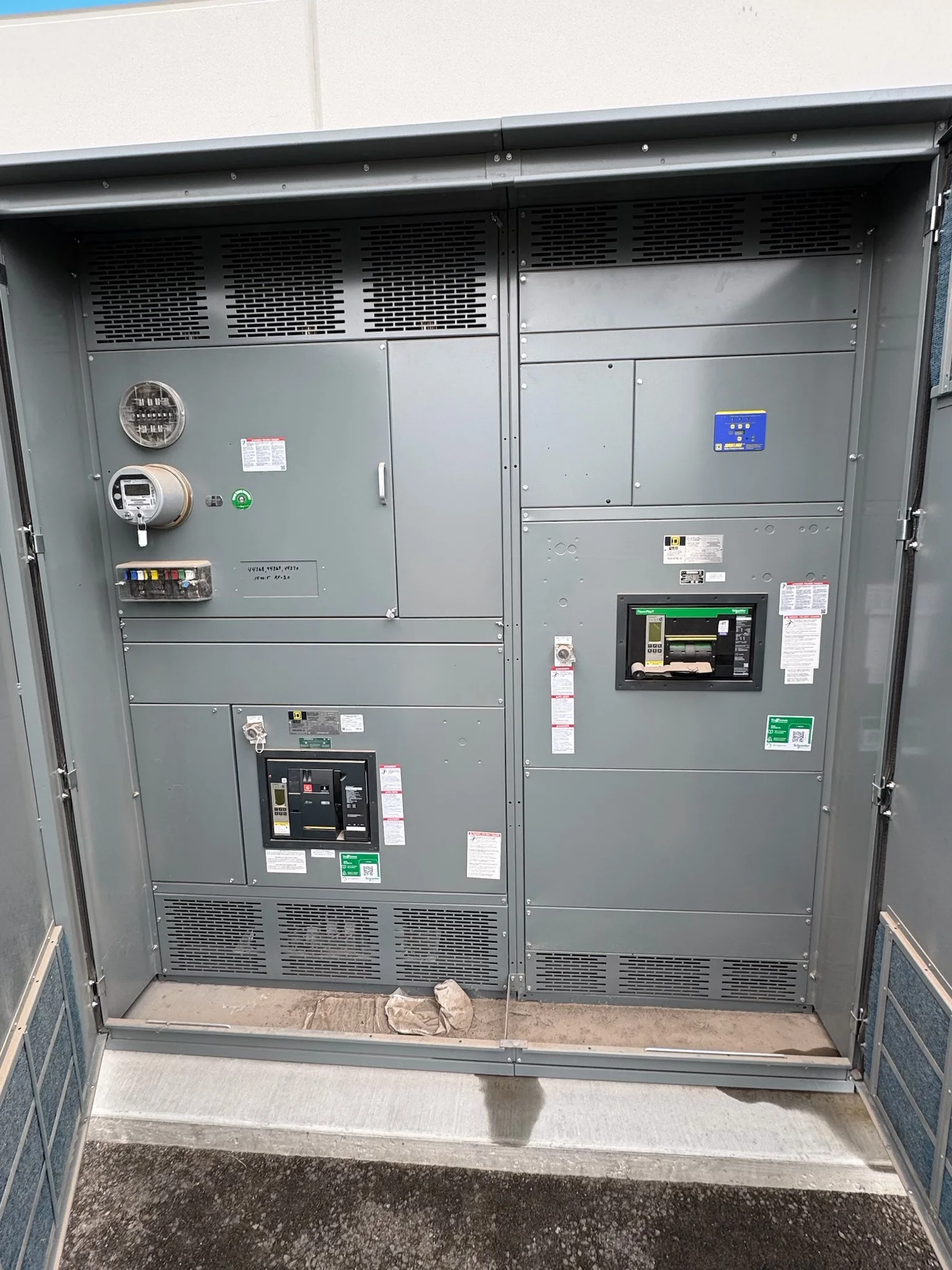
Start With the Serving Utility’s Metering Rules
For a new service in Hamilton, the serving utility—not the equipment manufacturer—determines its metering requirements and approval process. Confirm the applicable service manual, metering standards, and review contact early. Requirements can depend on service voltage, available fault current, transformer arrangement, and whether the utility or customer supplies particular components.
Do not assume a previous facility’s layout is acceptable at another address or for a changed service. Ask the utility to review a one-line diagram and proposed compartment arrangement before fabrication. Record written comments, required revisions, and approval milestones so the electrical engineer, contractor, and manufacturer can work from the same basis.
Determine Whether Instrument Transformers Are Required
The service design establishes whether metering uses current transformers, voltage transformers, or another utility-approved arrangement. Transformer requirements are not interchangeable across services. Confirm the intended metering method, service voltage, phase configuration, conductor sizes, and expected load with the utility and responsible engineer before selecting compartment dimensions.
Where instrument transformers are required, clarify who furnishes them, who installs them, and who connects secondary wiring. The utility may prescribe ratios, polarity, orientation, terminal access, or approved devices. These details affect bus or conductor routing and usable space; they should be documented rather than inferred from a generic metering-compartment sketch.
Place Transformers for Clear, Verifiable Access
Instrument-transformer placement must accommodate the utility’s inspection and metering work as well as the equipment’s electrical clearances. Confirm which conductors pass through each current transformer, the required orientation, and how voltage sensing will be connected. Keep the proposed arrangement consistent with the approved one-line and the utility’s metering diagram.
Access needs include a workable route to terminals, test points, wiring channels, and any removable barriers or covers. The utility may specify which areas must remain accessible or how compartments are secured. Review door swing, obstructions, adjacent equipment, and installed working space with the project team; do not treat nominal enclosure access as utility acceptance.
Coordinate the Compartment With the Switchgear Lineup
A metering compartment is one part of a coordinated distribution assembly, not a standalone box. Its position relative to service entrance conductors, overcurrent devices, bus, and other sections affects physical layout and electrical design. The engineer should establish the intended connection points and confirm that the overall arrangement matches the service configuration.
For low-voltage projects, identify whether the specified equipment is a UL 891 switchboard or UL 1558 low-voltage switchgear; these are distinct equipment categories and should not be described as equivalent. Medium-voltage metering requires a separately engineered configuration and applicable utility review. Confirm equipment type, ratings, and scope before requesting a build.
Set Boundaries for Safety, Sealing, and Maintenance
Ask the utility to identify any required separation between utility-accessible metering space and customer-controlled equipment. Confirm provisions for seals, locks, barriers, labels, and access control rather than assuming a standard door arrangement will satisfy local practice. The utility’s requirements and the approved drawings should govern these details for the specific service.
Design reviews should also address safe access for installation, inspection, and maintenance, including the contractor’s working space and the utility’s planned approach. Applicable code requirements, equipment instructions, and site conditions remain relevant. The responsible engineer should resolve clearances and work practices; compartment design alone does not establish a safe installation.
Prepare a Complete Submittal for Utility Review
A useful review package typically includes a current one-line diagram, proposed metering-compartment elevations, service data, and a description of the instrument-transformer arrangement. Provide conductor and bus information where available, along with equipment ratings and connection details. The utility can then identify mismatches before the manufacturer commits the layout to fabrication.
Ask the utility what drawings, forms, and review sequence it requires, and whether approval is needed at more than one project stage. Track comments against drawing revisions and identify who is responsible for each response. The manufacturer can incorporate approved design details, but only the serving utility can confirm its metering acceptance.
Information to Provide for a New Equipment Quote
For a quote, provide the project location in Hamilton, utility name, service voltage and phase, service size, available fault-current information if known, and the specified switchboard or switchgear type. Include the one-line, site constraints, conductor-entry preferences, and any utility metering standards or written comments already received.
Also identify the required instrument transformers and responsibility for furnishing and installation, if established; requested compartment position; enclosure conditions; and project schedule. Flag unresolved items instead of treating them as fixed requirements. A complete scope lets the manufacturer assess custom fabrication needs, identify missing design inputs, and prepare a proposal for new equipment.
Keep Approval, Fabrication, and Installation in Sequence
Resolve utility comments that affect transformer location, compartment access, or wiring before releasing final drawings for fabrication. If the utility changes its requirements, have the responsible engineer evaluate impacts on the one-line, equipment layout, and construction documents. Document approved revisions so the delivered configuration corresponds to the accepted project design.
The manufacturer builds new electrical distribution equipment in the United States with American components, offers custom fabrication, short lead times, and nationwide shipping. Confirm the project schedule and shipping needs when requesting a quote; do not treat any lead time as guaranteed without project review. The engineer, contractor, utility, and AHJ should coordinate final design and installation requirements.