Start With the Production Change
A factory expansion can add a new process line, larger motors, electric heating, robotics, or a second shift. Each changes the electrical demand differently. Begin with equipment schedules that identify voltage, phase, horsepower or input current, starting method, duty cycle, and expected operating hours, rather than one combined estimate.
Separate continuous loads from intermittent or cyclic loads, and note which machines may start together. Include anticipated future phases, but distinguish committed equipment from planning allowances. This helps the engineer assess demand and operating scenarios without treating every nameplate value as simultaneous load or assuming unused capacity is available.
Verify Spare Capacity at Each Level
Review capacity from the utility service and transformer through the main distribution equipment, bus, feeder breakers, and branch circuits serving the affected area. A spare breaker position is not proof of spare electrical capacity. Existing demand, protective-device ratings, bus limits, and the condition and documentation of installed equipment all matter.
Compare interval metering or demand records with operating schedules where available, and account for planned loads already included in other projects. Confirm available fault current and equipment ratings with the responsible engineer. Utility service changes, transformer work, or modifications to existing gear may require separate coordination and outage planning.
Match Equipment to the Distribution System
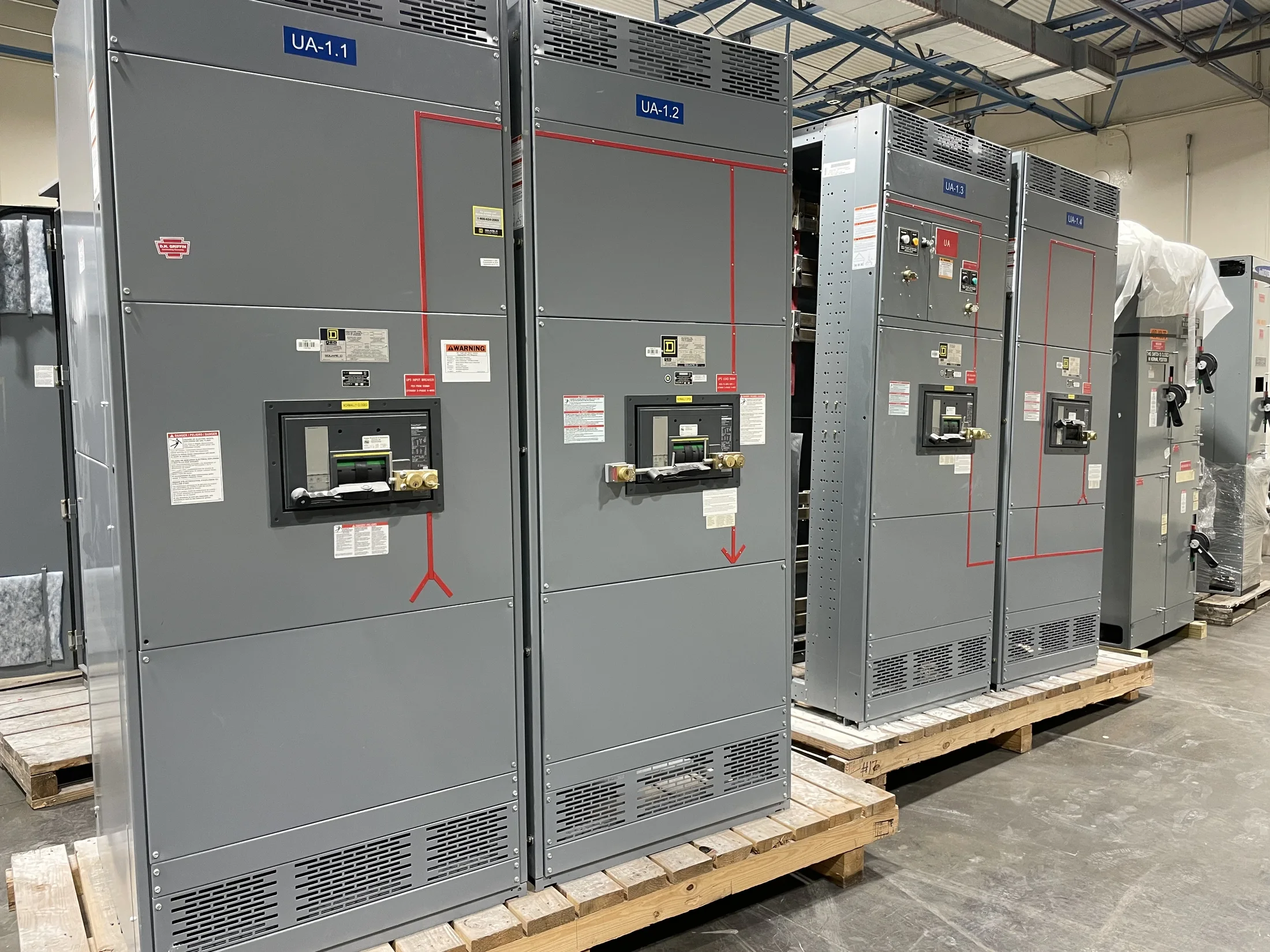
The right configuration depends on system voltage, service arrangement, load grouping, required isolation, and how operators need to maintain production. A new distribution section may serve added machinery, while a separate lineup or downstream panel may better isolate a process area. Confirm whether the work replaces, extends, or operates alongside existing equipment.
For low-voltage applications, UL 891 switchboards and UL 1558 low-voltage switchgear are distinct equipment categories; selection depends on the project design and requirements. Medium-voltage equipment is a separate class and is not covered by UL 891. Confirm applicable construction and listing requirements for the specified equipment and application.
Plan Feeder Routes Before Sizing
Trace candidate feeder paths from the proposed distribution point to production equipment, noting distance, routing through occupied or classified areas, tray and conduit space, penetrations, and access for installation. Existing pathways may be crowded or unsuitable. Route length and installation conditions influence conductor sizing, voltage drop, support, and termination details.
Check whether routes cross fire-rated assemblies, require shutdowns, or conflict with piping, structural members, and material-handling systems. The project team should establish who provides pathways, penetrations, and field measurements. Coordinate proposed routing with plant operations and the electrical contractor before equipment layouts are finalized or a quote assumes a particular connection point.
Coordinate Protection and Motor Starting
Added motors and process loads can change the coordination of upstream and downstream protective devices. Gather motor data, starting current, overload protection, drive or soft-starter details, and available fault-current information. The responsible engineer should evaluate protection settings, short-circuit ratings, selective coordination where required, and any impacts on existing devices.
Large starts may produce voltage dips or affect other sensitive loads, especially when several machines operate concurrently. Confirm starting sequence, production interlocks, and whether variable-frequency drives or other controls are specified. Do not assume a particular device or setting will solve a system issue without a study of the actual network and operating conditions.
Keep Outages and Expansion Phases Visible
A factory may need to keep current lines operating while new distribution is installed. Identify acceptable outage windows, temporary-power needs, tie-in locations, and limits on switching access early. The feasibility of live work, temporary connections, or staged energization must be assessed by qualified project personnel under applicable procedures.
For phased construction, document which loads arrive in each phase and which distribution components must be installed initially versus reserved for later. Spare spaces, future sections, and provisions for additional feeders are design choices to confirm—not automatic features. Clear phasing information helps align fabrication, site readiness, and commissioning plans.
Prepare the Information for a Quote
A useful request includes one-line diagrams, service and system voltage, transformer data, existing equipment schedules, available fault-current data, load records, and equipment plans. Add new-load schedules, motor and drive information, desired feeder destinations, routing sketches, environmental conditions, and any known utility or facility standards.
Identify the requested scope: new lineup, replacement, extension, feeder section, or another defined arrangement. State preferred delivery milestones, installation constraints, and whether field dimensions or engineering studies are still pending. Missing details can be listed as assumptions for review, rather than converted into unverified ratings or a fixed equipment configuration.
Build for the Confirmed Project Scope
A U.S. manufacturer can custom fabricate new switchgear and power distribution equipment for a confirmed Hamilton project and ship nationwide. Short lead times may be available, but schedule depends on the approved design, component availability, scope, and required review. Request a project-specific schedule alongside the technical proposal.
Before release, have the responsible engineer verify the design against the facility system, utility requirements, and applicable codes, and coordinate approvals with the authority having jurisdiction. Confirm interfaces, ratings, construction details, and documentation for the actual build. These checks help ensure the equipment proposal fits the expansion rather than a generic factory scenario.