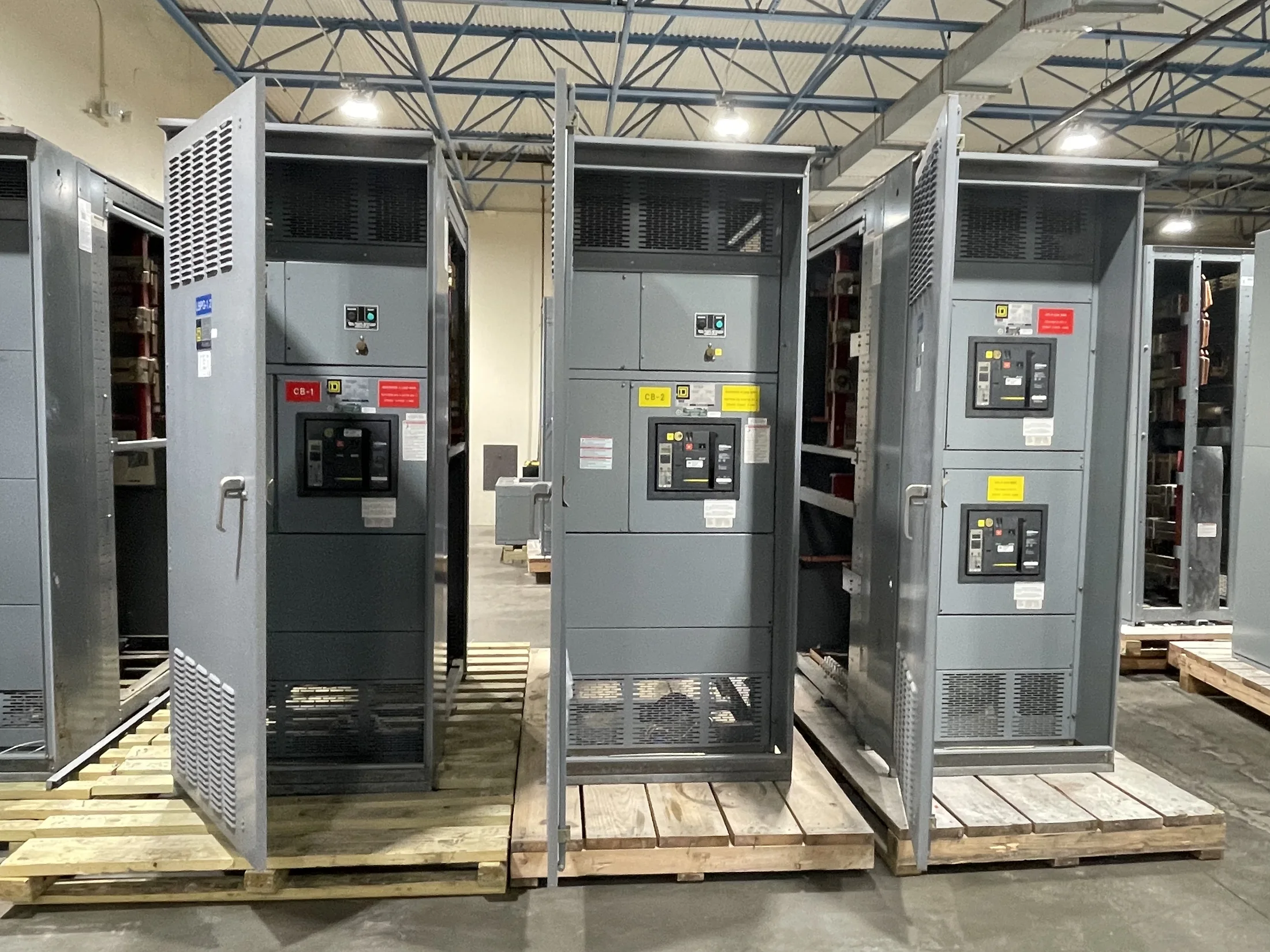
Start with the project’s electrical scope
Hamilton projects can range from a new industrial building to a service change in an occupied facility. Begin by defining what the equipment must serve, whether the work adds capacity, replaces an existing assembly, supports a new process, or reorganizes distribution. The scope determines which drawings and decisions are needed.
For a new installation, establish anticipated loads, voltage, phases, available fault current, and the planned service arrangement with the electrical engineer and utility. For a modification, document existing conditions and identify what remains in service. These facts help avoid quoting an assembly that cannot fit the project’s electrical or physical requirements.
Select equipment by function and voltage class
Low-voltage switchboards and low-voltage switchgear are distinct equipment categories, not interchangeable labels. UL 891 applies to switchboards; UL 1558 applies to low-voltage switchgear. Selection depends on the design, operating needs, and specified construction. Confirm the required equipment type and applicable standard with the responsible engineer.
Medium-voltage distribution requires equipment designed for that voltage class; UL 891 does not cover medium- or high-voltage equipment. Confirm the service voltage, utility interface, protection scheme, and project specifications before requesting a quote. The equipment configuration must follow the approved one-line diagram and the requirements of the serving utility and AHJ.
Coordinate new construction with the site plan
On new Hamilton construction, coordinate the distribution lineup with room dimensions, access routes, structural conditions, and adjacent systems before layouts are finalized. Confirm working space, equipment access, cable entry, and the route from delivery point to installation location. The engineer and contractor should resolve these constraints against applicable codes and project documents.
The one-line diagram should identify sources, main and feeder arrangements, loads, metering, and protective devices as required by the design. Confirm whether the project calls for features such as tie arrangements, spare provisions, or specific enclosure construction. They are project decisions, not automatic features of every assembly, and should be shown in the specifications.
Plan modifications around existing conditions
In an operating facility, field verification is essential before specifying replacement or added distribution equipment. Record the existing assembly’s dimensions, access clearances, cable and bus connections, service characteristics, and available shutdown windows. Photographs and existing drawings can help, but should be checked against actual conditions before fabrication begins.
Determine which loads must remain available during the work and whether temporary distribution or staged installation is part of the contractor’s plan. Confirm whether existing conductors can be reused, whether upstream protection changes, and how the new equipment will interface with retained gear. The responsible engineer should evaluate the complete system, not just the equipment being changed.
Verify utility and protection requirements
Utility service requirements can affect incoming equipment, metering, service disconnects, and the sequence for approvals. For a Hamilton project, confirm the serving utility and its current requirements directly rather than assuming that another local project’s arrangement applies. Resolve service details early enough to inform equipment drawings and procurement.
Protection and coordination decisions depend on system data, including available fault current and upstream device characteristics. Confirm interrupting and withstand requirements, protective-device selections, and coordination studies with the responsible engineer. Where required, the engineer should also verify arc-flash inputs and labels for the completed system; no rating or study outcome should be assumed from a preliminary quote.
Account for installation and operating needs
The best configuration must work for the people who install, operate, and maintain it. Confirm the intended front or rear access, cable termination direction, working clearances, compartment or section arrangement, and space for future circuits if the design calls for them. Check these details against the electrical room and the contractor’s installation plan.
Ask whether the facility has requirements for metering, communications, control interfaces, environmental conditions, or a particular enclosure type. Specify only what the application and project documents require, and identify the party responsible for furnishing connected systems. Equipment options can affect footprint, wiring, coordination, and schedule, so settle them before drawings are approved.
Prepare a quote package that supports accuracy
A useful quote request includes the one-line diagram, equipment specifications, voltage and phase, system frequency, load or feeder schedule, available fault-current data, and required equipment standard. Provide the intended service arrangement, utility requirements, enclosure conditions, and any specified metering, protective devices, or control interfaces.
For replacement or expansion work, add verified dimensions, connection details, photos, existing nameplate information, and notes about retained equipment. Include the Hamilton site’s delivery constraints, requested drawing milestones, and target installation sequence. State which details remain pending so the manufacturer can identify assumptions and questions rather than treating incomplete information as confirmed.
Coordinate fabrication, review, and delivery
The manufacturer builds new electrical distribution equipment in the United States using American components and offers custom fabrication for project-specific requirements. Short lead times may be available, but schedule depends on scope, design completeness, component availability, and approvals. Confirm current timing against the actual equipment configuration instead of relying on a general estimate.
Before release, have the responsible engineer review drawings and confirm the utility and AHJ requirements where applicable. Align delivery timing with site readiness, unloading arrangements, contractor resources, and any planned outage. Nationwide shipping supports projects in Hamilton and elsewhere, while final delivery access and installation coordination remain specific to each project.