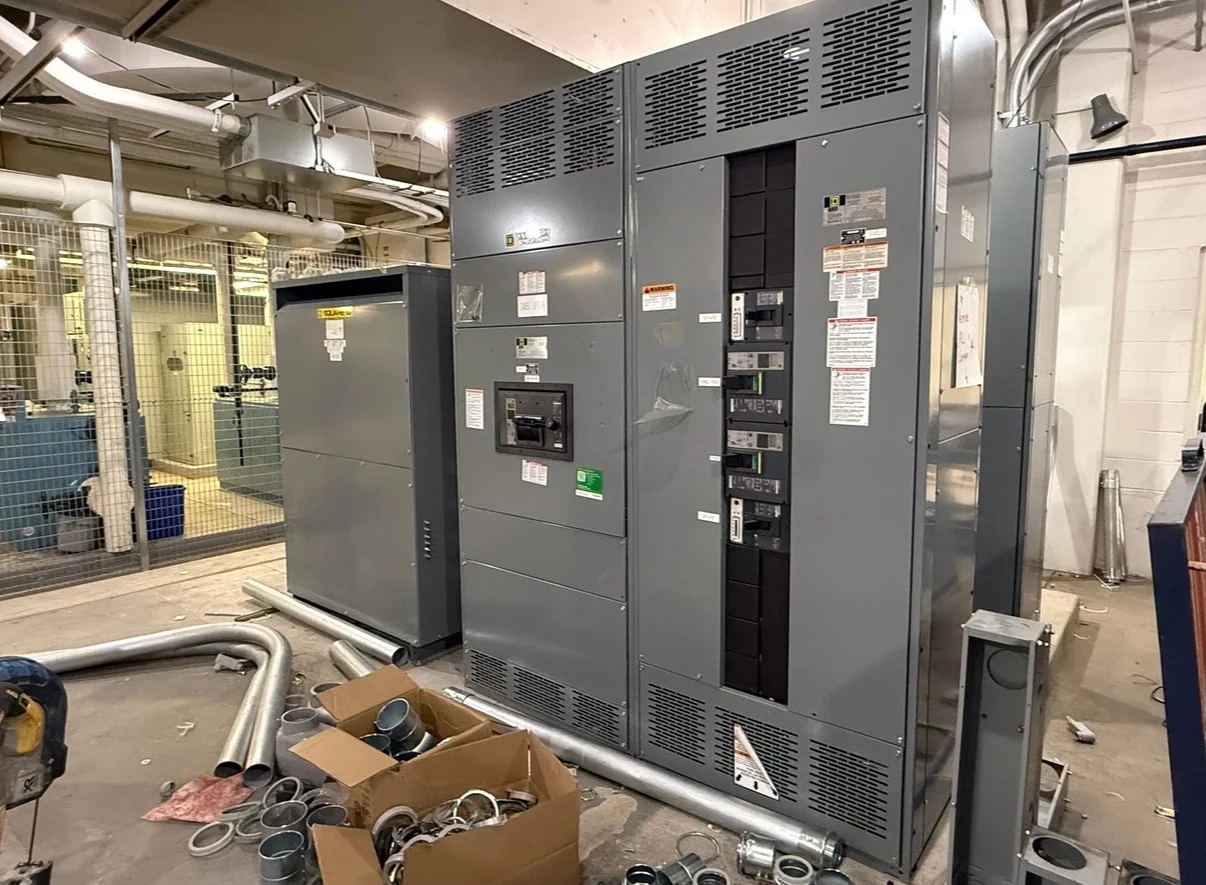
What closed transition changes
In a closed-transition transfer, the generator and utility sources overlap briefly while the load transfers, rather than opening one source before connecting the other. That momentary parallel can reduce interruption to selected loads, but it is a deliberate operating condition requiring compatible controls, protection, and utility authorization—not simply a different switch position.
Project teams should define which loads transfer, whether transfer occurs during a planned test or an actual outage, and what happens if either source is outside acceptable limits. Confirm the intended overlap duration and operating sequence with the engineer and utility; permissible conditions depend on the service arrangement and utility rules.
Confirm Duke Energy and service-territory requirements
Cincinnati-area projects must identify the serving electric utility and obtain its current requirements for generator paralleling at the specific service point. Do not assume a rule from another Ohio jurisdiction applies. The utility may require an application, one-line diagram, protective-device information, witness testing, or review before any closed-transition operation is approved.
Clarify whether the utility permits momentary paralleling for the proposed purpose and under what conditions. Requirements may address maximum overlap time, export prevention, relay functions, visible isolation, or operating procedures. The responsible engineer should coordinate directly with the utility and authority having jurisdiction, then document approved settings and responsibilities.
Choose a transfer equipment arrangement
The required configuration depends on service voltage, phase, current, available fault current, generator capacity, and the transfer method. A transfer switch or coordinated switching assemblies may be suitable, but the equipment must support the specified sequence and be engineered for the system. Confirm whether the project calls for service entrance equipment or downstream distribution.
For low-voltage applications, distinguish UL 891 switchboards from UL 1558 low-voltage switchgear; they are different equipment categories, and the project specification determines the applicable construction. Neither designation establishes suitability for medium-voltage service. If the generator connects at medium voltage, identify that scope separately and verify applicable equipment standards and utility criteria.
Design interlocking and source controls
Interlocking must prevent unintended source connection while allowing only the approved closed-transition sequence. The design may combine mechanical interlocks, electrical permissives, controller logic, and protective relays. Specify the conditions required before overlap, how synchronization is verified, and which actions trip or inhibit transfer if a source or control signal is abnormal.
Avoid treating an interlock as a substitute for a complete protection study. The engineer should assess synchronism-check, voltage and frequency supervision, reverse-power or export protection where required, breaker failure response, and loss-of-control behavior. Confirm which functions are required by the utility and which belong to the facility’s operating and safety plan.
Resolve generator and load constraints
Generator performance affects whether the proposed transfer is feasible. Provide the generator rating, voltage, frequency, control system, available fault contribution, and manufacturer data for synchronization and load acceptance. Identify motor starting, nonlinear loads, UPS systems, and other sensitive equipment that could affect voltage or frequency during transfer.
The load profile should distinguish continuous demand from short-duration peaks and identify essential loads, load shedding, and any transfer restrictions. Confirm whether the generator can carry the intended load after the utility disconnects. An engineer should evaluate grounding, neutral switching, fault protection, and coordination for both utility-fed and generator-fed operating modes.
Plan protection, grounding, and isolation
Closed transition changes the short period when both sources are connected and can alter fault-current paths. A short-circuit and coordination review should use utility fault-current data and generator characteristics, while accounting for the selected breakers, relays, and operating modes. Confirm interrupting ratings and equipment ratings against the completed study rather than assumptions.
Grounding and neutral arrangements need particular attention when a generator is connected to a utility service. Determine whether the generator is separately derived, whether a switched neutral is required, and how ground-fault protection behaves during overlap and isolated operation. The responsible engineer should resolve these details with the utility and AHJ before finalizing the equipment design.
Coordinate testing and operating procedures
A commissioning plan should verify the approved transfer sequence, interlock operation, synchronization permissives, protective functions, alarms, and failure responses. Define test boundaries and whether any test involves actual utility paralleling. Utility notification or attendance may be required; no test should create an unauthorized parallel condition or rely on unapproved settings.
Facility procedures should identify who can initiate a transfer, how automatic and manual modes differ, and what operators do after a failed transfer or unexpected trip. Include maintenance isolation and lockout provisions in the design review. Record final settings, approved operating limits, test results, and utility acceptance in the project documentation.
Prepare a quote-ready project package
For a useful equipment quote, provide the one-line diagram, service voltage and ampacity, phase, utility fault-current data, generator nameplate and control information, load schedule, and transfer sequence. Include requested enclosure location, environmental conditions, cable entry preferences, space limitations, metering, communications, and any owner or consultant specifications.
Also provide utility correspondence or stated paralleling conditions, applicable drawings, required equipment standards, delivery destination, and the project schedule. Identify which engineering decisions remain open rather than assuming them. The U.S. manufacturer builds new switchgear and power distribution equipment with American components, offers custom fabrication, short lead times, and nationwide shipping; final scope and lead time depend on confirmed requirements.