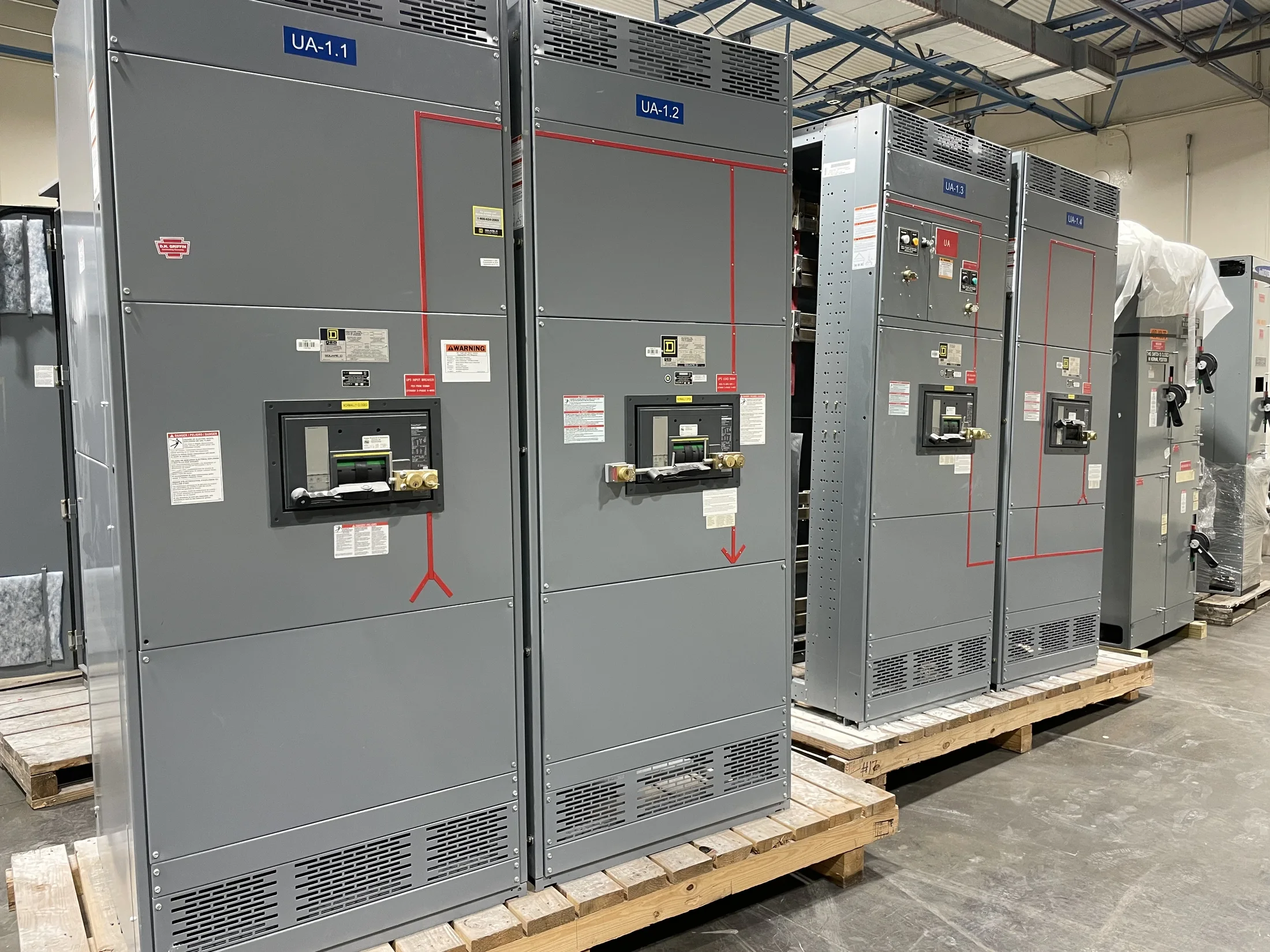
Start by Identifying the Equipment Category
Before applying a standard to a project, confirm that the specified equipment is a low-voltage switchboard within the scope of UL 891. A switchboard is not interchangeable by name with UL 1558 low-voltage switchgear, and neither designation describes medium-voltage equipment. The project one-line and intended function are useful starting points.
Ask the engineer of record to identify the applicable product standard and governing code requirements for the installation. The answer can depend on the assembly type, application, and project specifications. UL 891 does not cover medium- or high-voltage equipment; those systems require a separate standards and design review.
Define the Assembly Before Reviewing Compliance
UL status applies to a defined construction, not simply to a manufacturer’s product family or a list of available components. Record the proposed sections, bus arrangement, incoming and distribution devices, enclosures, and intended installation conditions. Changes in these details may affect whether the completed assembly matches an evaluated construction.
For a custom configuration, ask which aspects are within the manufacturer’s established construction and which need review before release. Do not assume that combining individually listed components creates a listed switchboard. The responsible parties should resolve configuration questions before drawings are treated as approved for fabrication.
Specify Electrical Ratings and System Conditions
A useful design package identifies system voltage, phase and wire arrangement, frequency, available fault current, and the required short-circuit rating or withstand basis. It also states the service or feeder role and any operating constraints. These inputs guide device selection and bus design, but do not establish a rating by themselves.
Confirm the available fault current and protective-device coordination with the responsible engineer and, where applicable, the utility. Check that the requested assembly rating and upstream protection suit the actual system. Do not infer interrupting capacity, withstand performance, or a particular rating from a general UL 891 reference.
Resolve Layout, Devices, and Protective Functions
Describe the source arrangement, main and feeder devices, distribution requirements, metering, control power, and any transfer or tie functions. State whether the design calls for front access, rear access, or a particular lineup orientation. These choices affect section layout, wiring space, maintenance access, and the information needed for drawings.
Identify device frame sizes or desired functions when known, while allowing engineering review of compatibility and construction. Confirm required accessories, trip features, instrument transformers, and control interfaces. If a project specification names a device or arrangement, provide its exact requirements; do not treat optional functions as standard on every switchboard.
Check Environmental and Installation Constraints
Document the installation location, indoor or outdoor application, ambient conditions, available room, access path, and entry direction for conductors. Include dimensions or site restrictions that affect shipping and placement. Enclosure construction and environmental provisions must be confirmed for the specific order rather than assumed from a product category.
The project team should also review working space, egress, ventilation, cable bending space, and applicable code requirements. Identify seismic, corrosion, dust, moisture, or other environmental conditions where relevant. The engineer, installer, and authority having jurisdiction should resolve site-specific requirements before the equipment configuration is finalized.
Verify the Status of the Particular Build
To confirm a switchboard’s status, request documentation that identifies the exact assembly and its applicable certification or listing basis. Compare the nameplate and markings, model or job identification, ratings, and configuration with the approved submittal. A catalog statement or component mark alone does not verify the complete delivered assembly.
Ask the manufacturer to explain any limits or conditions tied to the documented construction and to identify deviations from the approved configuration. If a drawing revision changes devices, bus, enclosure, or arrangement, obtain a fresh status review. The customer and project engineer should retain the final records with equipment documentation.
Prepare Quote Information That Supports Review
A quote request should include the latest one-line, specifications, load or feeder schedule, system data, and required ratings. Add a section layout, cable entry details, metering and control requirements, and applicable project notes. Clearly mark unresolved items so the manufacturer can identify assumptions and request decisions rather than silently fill gaps.
Include delivery location, requested schedule, drawing and submittal expectations, and any site or packaging constraints. Schedule needs should be reviewed against the actual scope and current production conditions; no lead time should be presumed. A complete, coordinated package helps manufacturers of new switchboards assess scope and prepare a meaningful proposal.
Coordinate Review Through Approval and Delivery
Treat submittal review as a technical checkpoint, not a substitute for design responsibility. The engineer should verify ratings, protective coordination, system interfaces, and code compliance. The utility and authority having jurisdiction should be consulted where their requirements apply, especially when service characteristics or installation rules remain unsettled.
Before release, reconcile approved drawings, quoted scope, and the assembly identification used for status documentation. Record approved changes and confirm their effect with the manufacturer. U.S. manufacturing, domestic components, custom fabrication, short lead times, and nationwide shipping may support procurement planning, subject to the requirements and schedule of each project.