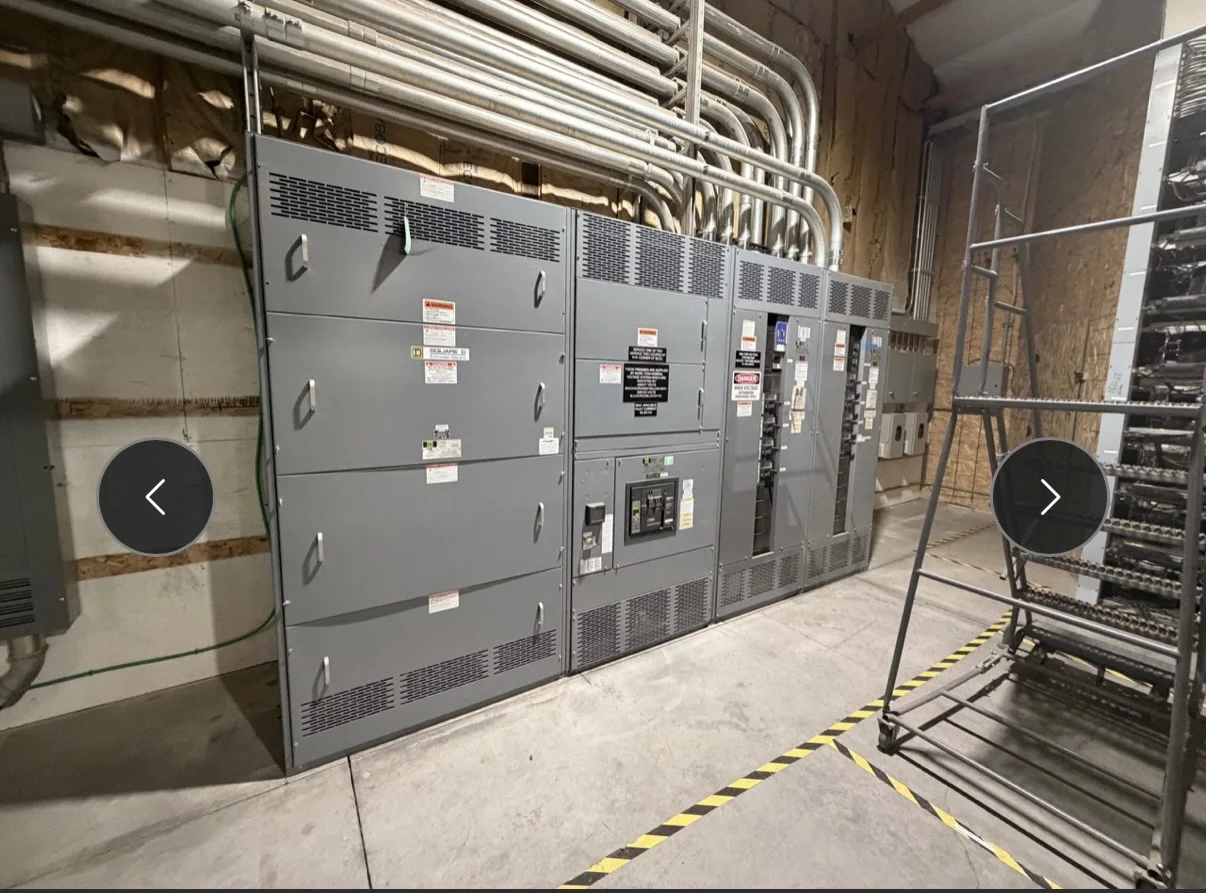
Start With the Classified-Area Documents
Before locating a switchboard or switchgear lineup, obtain the current hazardous-area classification drawings and supporting documentation. These should identify classified boundaries, divisions or zones, material groups, and temperature classifications where applicable. Confirm that drawings reflect current process equipment, operating conditions, and planned project changes rather than relying on an older site plan.
Classification is a design input, not something an equipment supplier can infer from a facility name or process description alone. The owner’s electrical engineer and process-safety team should resolve unclear boundaries and document assumptions. Share the approved drawings with the equipment manufacturer so the proposed arrangement can be evaluated against the stated installation location.
Treat Boundaries as a Layout Constraint
A boundary can affect more than the main equipment footprint. Consider doors, ventilation openings, cable trenches, conduits, ducts, and spaces beneath elevated equipment, as well as nearby sources of flammable gas or vapor. The responsible engineer should check how the classification applies in three dimensions and whether site geometry or operating scenarios alter the indicated extent.
Compare the equipment outline and access clearances with the classified-area drawing at the intended elevation. A lineup placed just outside a boundary may still have associated components or openings extending into it. Confirm the location of transformers, control stations, junction boxes, and remote devices separately; do not assume every component shares the switchgear’s classification or enclosure requirements.
Identify the Applicable Code Path
For U.S. installations, the adopted edition of NFPA 70, the National Electrical Code, and local amendments establish important requirements for classified locations. Applicable provisions depend on the classification method, area, equipment type, and installation. The authority having jurisdiction interprets and enforces adopted requirements; the utility may also impose service or interconnection criteria.
Do not treat a product standard as a substitute for area classification or code review. UL 891 applies to low-voltage switchboards, while UL 1558 addresses low-voltage switchgear. Neither standard classifies a hazardous location, and UL 891 does not cover medium- or high-voltage equipment. Confirm the intended voltage class, applicable product requirements, and approval expectations for the specific build.
Match Equipment Type to the Installation
Many power distribution lineups are installed in an unclassified electrical room or building, with conductors routed to classified process areas. That arrangement may be practical, but its acceptability depends on the documented boundary, room construction, openings, ventilation, and complete wiring method. The design team must verify the room’s status and ensure equipment access does not cross into a classified area.
If equipment must be located within a classified boundary, the required protection depends on the classification and the particular equipment and installation method. Do not assume a standard indoor switchboard or switchgear lineup is suitable there. Confirm whether relocation, a suitable enclosure or other approved equipment arrangement is required, and have the responsible engineer validate the complete design.
Coordinate Enclosures, Cables, and Interfaces
Enclosure selection should follow the actual environment and applicable requirements, including exposure to weather, dust, corrosive agents, washdown, and temperature. A general-purpose enclosure rating is not proof of suitability for a classified location. Confirm the exact location and conditions for the lineup, cable entry points, control devices, and any equipment mounted outside the main assembly.
Cable and conduit interfaces can influence both boundary coordination and manufacturability. Provide the planned entry direction, conductor types and sizes, termination requirements, routing constraints, and available bending space. Identify whether the project expects top or bottom entry, incoming and outgoing sections, control wiring interfaces, or provisions for future circuits. Final details remain subject to approved drawings and engineering review.
Resolve Electrical and Site Constraints Together
Moving a lineup outside a classified boundary can introduce other design constraints. Check feeder lengths, voltage drop, available fault current, protection coordination, grounding, arc-flash evaluation, and utility service requirements. Also verify working space, egress, lifting access, floor loading, equipment ventilation, and environmental limits. These considerations can determine whether a proposed location is electrically sound and maintainable.
For outdoor or modular installations, evaluate the complete arrangement rather than only the switchgear enclosure. Account for the building or shelter, doors, HVAC equipment, penetrations, cable transitions, and adjacent process equipment. Ask the engineer to reconcile these details with classification drawings and site standards before releasing fabrication information, especially when layout revisions shift boundaries or access routes.
Prepare a Useful Quote Package
A quote request should identify the application, site location, voltage, system configuration, required current and fault-duty information, and the intended equipment standard or specification. Include the latest single-line diagram, load or feeder schedule, classification drawings, equipment location plan, and relevant utility or owner requirements. Mark unresolved items clearly rather than presenting preliminary assumptions as approved design criteria.
Also provide dimensional limits, indoor or outdoor conditions, cable-entry preferences, control and metering needs, interface points, schedule targets, and the responsible engineer’s contact for technical questions. State whether the equipment will be installed inside or outside each classified boundary. This lets the manufacturer assess custom fabrication needs, identify missing inputs, and develop a proposal for newly manufactured equipment.
Review Drawings Before Release
During submittal review, compare the proposed lineup dimensions and interfaces with the current site layout and classification documents. Check room boundaries, openings, equipment access, cable routes, and the location of ancillary devices. Confirm that all project-specific ratings, construction details, and documentation requirements are addressed in the approved scope; do not rely on a generic catalog description.
The responsible engineer should resolve design questions with the owner, utility, and AHJ as applicable before installation. Boundary changes, process modifications, or revised equipment locations may require updated classification and electrical reviews. A U.S. manufacturer can build new equipment to the reviewed project requirements, with custom fabrication and nationwide shipping; final suitability depends on the approved design and installation.