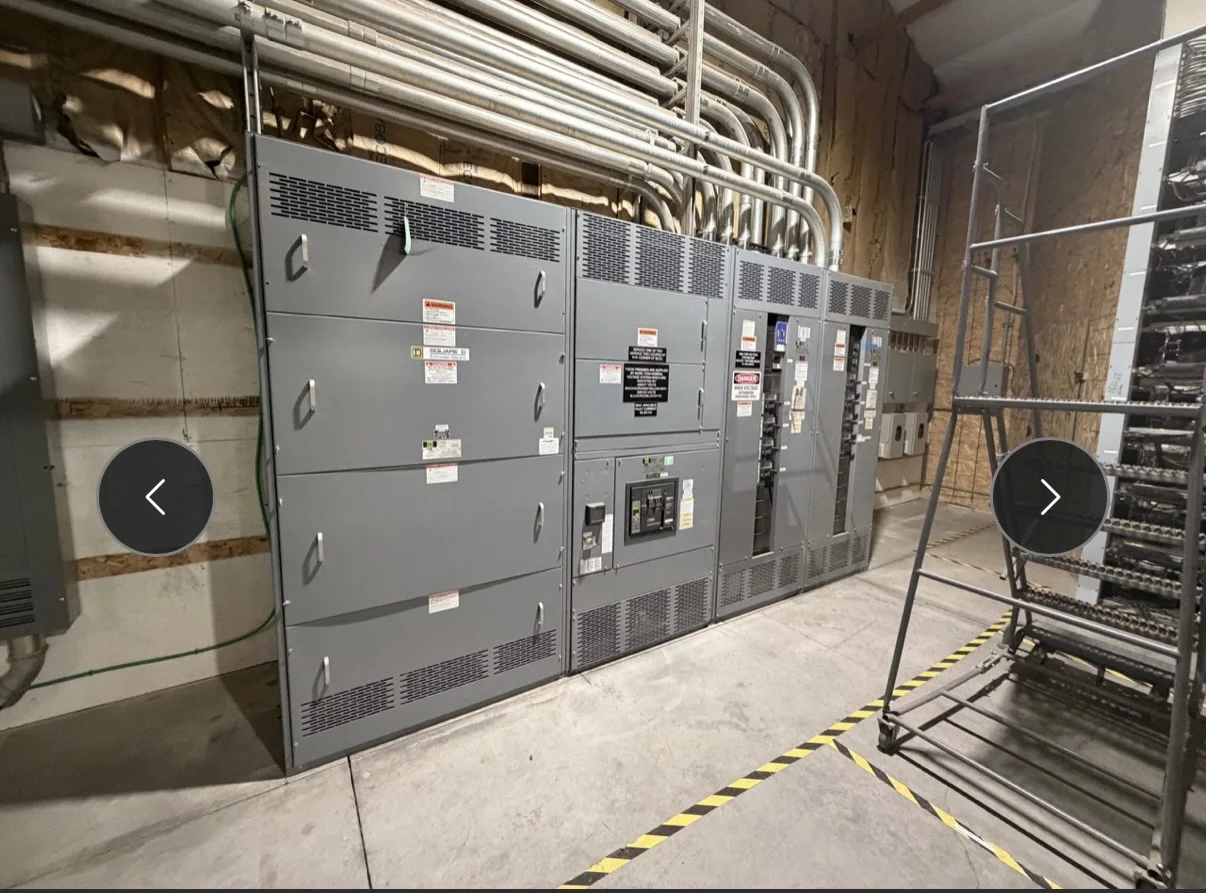
What the rating describes
Short-circuit current rating, commonly abbreviated SCCR, is an assembly-level designation tied to specified short-circuit conditions. It indicates the level of fault current an assembly can withstand, or safely interrupt where its design and applicable rating provide for interruption. The rating is meaningful only with the conditions and limitations established for that equipment.
SCCR is not a prediction of the fault current that will occur, nor a general measure of normal operating capacity. It does not describe voltage, continuous current, or arc-flash exposure. Those are separate electrical and safety considerations, although they may affect equipment selection, system design, and the information required for a project review.
Compare the rating with available fault current
The design team needs to establish the maximum available short-circuit current at the equipment’s installation point. Utility source data, transformer impedance and capacity, conductor length and size, and upstream system configuration can influence that value. A qualified engineer should calculate or obtain the applicable value for the actual system, rather than rely on a site-wide estimate.
Compare the calculated available fault current with the equipment’s applicable short-circuit rating and the conditions under which that rating applies. A mismatch requires engineering review before purchase or installation. Source changes, transformer replacement, parallel feeds, or generator additions can change fault-current levels, so an older study may not represent the final configuration.
Understand the equipment type and standard
The terminology and rating basis depend on the equipment category and governing product standard. A low-voltage switchboard evaluated to UL 891 is distinct from low-voltage switchgear evaluated to UL 1558. Neither standard should be treated as interchangeable, and UL 891 does not cover medium- or high-voltage equipment.
Medium-voltage assemblies have different construction, application, and rating considerations from low-voltage equipment. The project specification should identify voltage class, equipment type, applicable standard, and required rating basis. The responsible engineer and manufacturer can then review the request against the intended design, rather than applying a familiar low-voltage label to a different class of equipment.
Ratings depend on the complete configuration
An assembly’s rating may depend on its protective devices, bus arrangement, enclosure, internal components, and the specific combination evaluated. Substituting a breaker or fuse, changing a feeder arrangement, or modifying a section can affect whether the stated rating applies. A rating should not be assumed to transfer automatically to a different lineup or component selection.
For custom equipment, define the one-line arrangement and protective-device requirements early. Identify main and feeder devices, tie breakers, source connections, and any intended alternate operating modes. The manufacturer can use those details to evaluate a proposed new assembly, while the engineer confirms that the selected configuration meets the project’s coordination and system requirements.
Distinguish SCCR from interrupting rating
SCCR and an individual protective device’s interrupting rating are related but not interchangeable terms. The interrupting rating addresses a device’s capability to interrupt fault current under specified conditions. SCCR describes the assembly’s applicable short-circuit capability, which can be constrained by components or by the evaluated combination of devices and equipment.
Some equipment configurations may rely on a tested or otherwise permitted combination of upstream protection and downstream components. The application conditions matter, including device types, settings where relevant, and installation arrangement. Engineers should verify the documentation and applicable code requirements for the specific combination; a higher-rated upstream device alone does not establish an assembly rating.
Read markings and project documentation carefully
Equipment markings and submittal documents should be reviewed for the stated rating, voltage, and any qualifying conditions. Check that the identification applies to the complete assembly being supplied, not merely one breaker or a component catalog entry. If a rating depends on a particular protective-device combination, verify that the supplied configuration matches it.
Coordinate ratings with the approved drawings, specifications, and short-circuit study. If documents conflict, resolve the discrepancy before release or installation. The engineer of record should assess system calculations and protective-device coordination, while the authority having jurisdiction determines applicable code acceptance. Manufacturers can clarify their proposed equipment details but do not replace project design review.
Information to provide for a quotation
A useful quotation request identifies equipment type, nominal system voltage, phase and wire arrangement, continuous-current needs, bus configuration, and the requested SCCR. Include the calculated available fault current at the equipment location, the source and date of the study, and the specified governing standard when known.
Also provide the one-line diagram, protective-device schedule, enclosure and environmental requirements, incoming and outgoing connection details, and any required dimensions or interface constraints. Note planned sources such as utility, generator, or parallel transformers. These project-specific inputs let a U.S. manufacturer assess custom fabrication needs and prepare a proposal for newly built equipment without assuming unprovided conditions.
Reconfirm ratings when the system changes
A short-circuit rating is not a permanent guarantee that every future system arrangement remains suitable. Utility upgrades, additional generation, transformer changes, new parallel paths, or revised protective devices can increase available fault current or alter the conditions supporting a rating. Reevaluate the installation whenever a material change affects the power system.
Before ordering or modifying equipment, have the responsible engineer verify the final study, operating modes, and protective-device selections. Confirm utility data and coordinate with the AHJ where required. A manufacturer can build new switchgear and distribution equipment to project specifications, with custom fabrication and nationwide shipping; final suitability remains dependent on the approved design and installation.