What interrupting rating means
A protective device’s interrupting rating is the maximum current it is rated to interrupt under specified conditions, such as a stated voltage and the applicable product standard. It concerns the device’s ability to open a circuit during a fault, when current may be far greater than normal load current.
The term commonly applies to circuit breakers and fuses. It is not a prediction of the fault current a facility will experience, nor does it mean the device limits every fault to that value. The actual rating and conditions must be read from the device markings and applicable documentation.
Interrupting rating versus available fault current
Available fault current is the prospective short-circuit current at a particular point in an electrical system. It depends on sources and system impedances, including the utility supply, transformers, conductors, generators, and motors. The value can differ between the service entrance and downstream equipment, so location matters.
For an application to be suitable, the protective device’s interrupting rating must be adequate for the available fault current at its installation point, using the applicable voltage and evaluation method. The responsible engineer should obtain or calculate the fault current and confirm the basis, rather than choosing a rating from load amperage alone.
Do not confuse device and assembly ratings
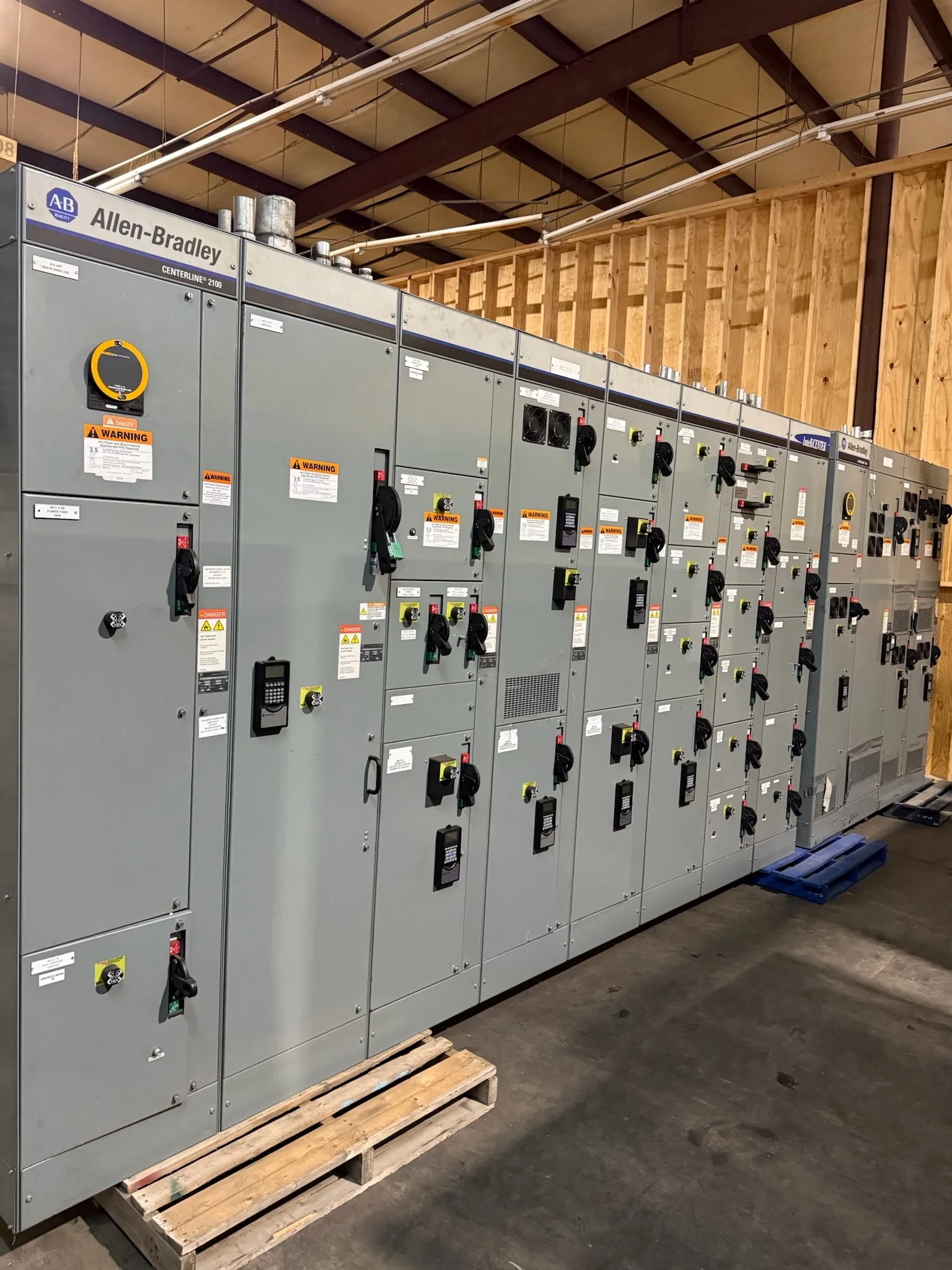
A breaker’s interrupting rating is a device characteristic; a switchboard or switchgear assembly also has short-circuit-related ratings and conditions that must be evaluated. These ratings are not interchangeable. An assembly rating does not automatically increase the interrupting rating of an installed breaker, and a breaker rating alone does not establish the assembly’s suitability.
For low-voltage distribution, UL 891 applies to switchboards, while UL 1558 applies to low-voltage switchgear. Medium-voltage equipment follows different standards and design requirements. Confirm the equipment category, voltage class, and marked ratings for the actual configuration; UL 891 is not a medium- or high-voltage equipment standard.
Voltage, device type, and conditions
An interrupting rating is tied to specified conditions, including system voltage and the device’s design and listing or evaluation. A rating shown at one voltage should not be assumed to apply unchanged at another. Fuse and breaker ratings may be established and presented differently, so compare the exact device data against the project’s application.
Also distinguish interrupting rating from continuous current rating, frame size, trip setting, and short-time withstand rating. Those address different operating or fault-duty characteristics. The selected protective device must suit its intended function and coordinate with the system design; a high interrupting rating by itself does not establish correct protection or selectivity.
Series ratings and selective coordination
Some systems use a tested series combination of upstream and downstream overcurrent devices to address fault interruption. Such a combination is acceptable only where the applicable rules permit it and the exact devices, ratings, voltage, and installation conditions match the documented combination. Substituting a breaker or changing the arrangement can invalidate that basis.
Selective coordination is a separate design objective: it seeks to have the protective device nearest a fault operate first under specified conditions. A series rating does not, by itself, demonstrate selective coordination. The engineer should review manufacturer data, applicable code requirements, and the project’s coordination study before specifying either approach.
How system configuration affects selection
Fault current at a bus can change with transformer impedance and size, utility contribution, conductor length and material, parallel runs, and connected rotating equipment. Alternate sources, including generators or closed transition arrangements, can create operating cases with different fault contributions. Study the relevant configurations rather than relying on a single nominal operating condition.
A protective device selected for one lineup position may not be appropriate elsewhere in the distribution system. Review the one-line diagram, equipment arrangement, source-transfer modes, and device locations. Where system changes are planned, such as a transformer replacement or added generation, reassess available fault current and device suitability with the responsible engineer.
Information to confirm for new equipment
For a switchboard or switchgear quote, provide the one-line diagram, nominal voltage, service and feeder details, source and transformer data, available fault current at the proposed equipment, and the required device types and ratings. Identify any generator, transfer scheme, parallel source, or unusual operating mode that could affect fault duty or protection.
Also state the equipment category and applicable project requirements, including any required short-circuit rating, protective-device manufacturer or family constraints, metering, enclosure, and coordination documentation. These details allow the manufacturer to review the proposed configuration and identify items needing engineering confirmation. A quote should not be treated as a substitute for a completed fault-current study.
Engineering review and procurement checks
Before release, have the responsible engineer verify fault-current calculations, device interrupting ratings, assembly short-circuit ratings, coordination, and applicable code requirements. Confirm utility data and review the design with the authority having jurisdiction where required. Verify the final submittal against the approved one-line and specifications, especially after changes to sources or equipment.
A U.S. manufacturer can build new custom switchboards and switchgear around confirmed project requirements, using American components, with short lead times and nationwide shipping. For a useful review, share current drawings, utility fault-current information, transformer nameplate data, and the project schedule. Ratings and available configurations remain subject to the final engineered design and equipment documentation.