Definition at a Specific System Point
Available fault current is the prospective current that could flow if a short circuit occurred at a particular point in an electrical system. It is a calculated value, not a current normally flowing through the circuit. The result depends on the source and the impedances between that source and the fault location.
Because the value belongs to a location, it can differ across one facility. A service entrance, switchboard bus, downstream panel, and motor terminals may each have a different available fault current. Any stated value should identify its point of reference, system voltage, and relevant operating configuration.
How Engineers Establish the Value
An engineer evaluates the utility source, transformer characteristics, conductor impedance, and other significant elements feeding the point under study. Utility-provided short-circuit data is often an important input. Transformer impedance and rating, conductor material and length, and parallel paths can also affect the calculated prospective current.
The calculation method and assumptions matter. A study may consider maximum source strength, motor contribution, generator operation, or alternate feeder arrangements where applicable. The responsible engineer determines which conditions govern the design and documents the assumptions; a rough estimate should not substitute for project-specific fault-current analysis.
Why the Number Matters for Equipment
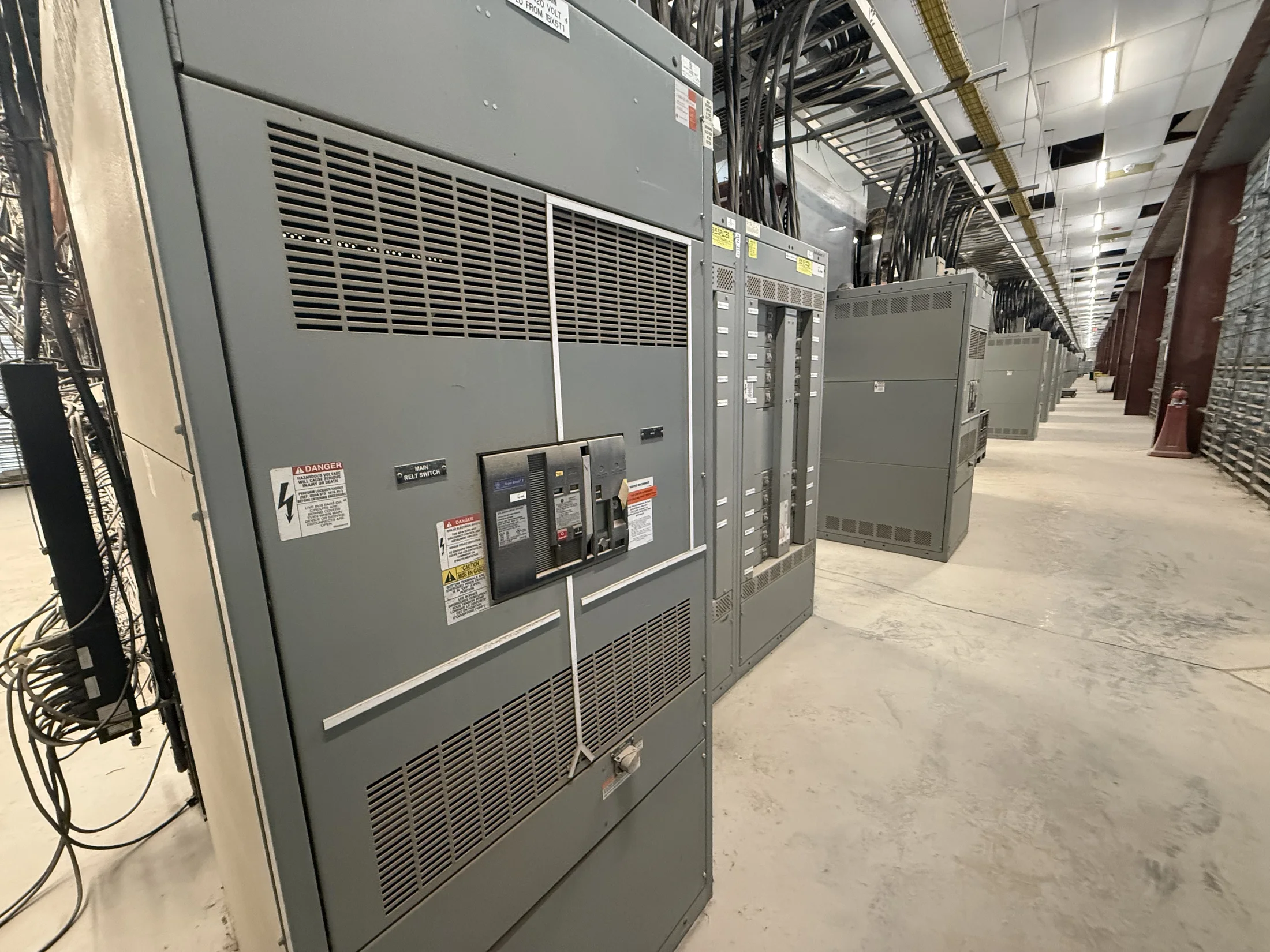
Available fault current is compared with the applicable short-circuit ratings of equipment and components at their installed locations. The comparison helps determine whether the proposed assembly is suitable for the prospective duty under the stated conditions. It is not, by itself, a complete evaluation of protection, coordination, or system safety.
For new switchboards and power distribution equipment, the engineer should establish the required ratings and configuration before procurement. The equipment type, voltage, bus arrangement, protective devices, and any permitted series combination can affect the evaluation. Confirm the applicable listing, labeling, and documentation requirements for the specific build.
Do Not Confuse Current and Interrupting Rating
Available fault current describes the prospective system condition at a point. An overcurrent protective device’s interrupting rating describes its capability to interrupt current under specified conditions. These terms are related, but they are not interchangeable, and comparing only a breaker rating with a system value may miss assembly-level requirements.
A switchboard or switchgear assembly may have a short-circuit current rating established under applicable product standards and construction conditions. UL 891 applies to low-voltage switchboards; UL 1558 applies to low-voltage metal-enclosed switchgear. Neither label should be treated as a blanket statement about medium-voltage equipment.
Configuration Can Change the Calculation
A facility’s operating arrangement can change the fault current at a bus. Two utility feeds, a normally open tie, an alternate source, on-site generation, or parallel transformers may create different available-current conditions depending on which devices are closed. The engineer should identify normal and credible alternate operating states relevant to the design.
Protective-device selection and permitted combinations also need careful review. A series-rated arrangement, where applicable, depends on specific device combinations and installation conditions, not merely on a general claim that one upstream device limits fault current. Confirm the basis with the responsible engineer and equipment documentation.
Information to Confirm Before Equipment Selection
Useful design inputs include system voltage and phase, utility short-circuit data and point of delivery, transformer kVA and impedance, conductor sizes and lengths, and the one-line diagram. Include source and tie configurations, generator or motor contributions where relevant, and the exact bus or terminals where the value is needed.
Also confirm the project’s required equipment type, service conditions, protective-device scheme, and applicable codes or specifications. If source data is preliminary, identify that status and ask the engineer or utility to confirm it. A quote based on incomplete inputs should clearly state what remains to be verified.
Applying the Definition to a New Equipment Quote
When requesting a quote for newly manufactured distribution equipment, provide the available fault-current study or the engineer’s stated design value, including its location and assumptions. Share the one-line, voltage, bus details, enclosure and installation constraints, and required protective devices. This helps define a build for engineering review rather than relying on an unstated default.
A U.S. manufacturer building with American components can review project-specific requirements for custom fabrication and nationwide shipment. Lead time depends on the equipment scope, design information, component availability, and review needs; confirm the schedule for the actual project. Do not treat a quote as confirmation that an electrical design is adequate.
Verify the Design with Responsible Parties
Available fault current can change if the utility modifies its system, a transformer is replaced, conductors are rerouted, or generation is added. For that reason, confirm the data is current for the planned installation and the intended operating configuration. The engineer of record should reconcile equipment ratings with the completed short-circuit analysis.
Have the responsible engineer review the design and coordinate with the utility and authority having jurisdiction where required. Confirm equipment labeling and installation details against project documents and applicable requirements. A definition clarifies the term, but only a project-specific study and review can establish the value and equipment suitability for a particular installation.