The project team leads utility coordination
The serving utility establishes requirements for connecting a facility to its distribution system. The owner, electrical engineer, contractor, or designated project manager should contact the utility and gather the applicable service criteria. A manufacturer can use confirmed criteria to develop equipment, but cannot determine what a utility will approve.
Responsibility may be assigned differently from project to project, so identify one person to manage utility communications and document decisions. That person should coordinate the owner’s needs, engineering design, contractor installation scope, and equipment supplier questions, then distribute current utility responses to everyone preparing plans or pricing.
Ask the serving utility for project-specific criteria
Request the utility’s current requirements for the specific service location and project. Useful items can include service voltage, phase and frequency, available fault current or fault-duty information, service entrance arrangement, metering provisions, utility-owned equipment boundaries, and connection or inspection procedures. The utility determines which criteria apply to its system.
Do not rely on a neighboring facility’s service details or an old project package as proof of current requirements. Utility standards and system conditions can vary by location and change over time. If information is preliminary, incomplete, or subject to review, record that status and ask the utility what remains to be confirmed.
Resolve service voltage and connection arrangement
Service voltage and the utility’s connection arrangement influence the equipment architecture. Confirm whether service is low voltage or medium voltage, the number of phases, and where the utility’s conductors terminate. For medium-voltage service, ask about the required transition, metering, and switching interfaces rather than assuming a low-voltage switchboard is suitable.
Also establish the demarcation point and which party supplies, installs, owns, and maintains each component. A design may involve utility transformers or service conductors outside the customer’s equipment scope. The engineer should reconcile utility criteria with the one-line diagram, load requirements, available space, and applicable codes before equipment is specified.
Verify fault duty, ratings, and protection expectations
Ask for available fault current at the relevant service point, the basis and date of that information, and any utility limits or protection coordination requirements. The responsible engineer uses these inputs, together with system design and applicable standards, to evaluate equipment ratings and protective-device selection. A quote should not assume an unverified fault-duty value.
Confirm whether the utility has requirements affecting protective functions, relay interfaces, settings coordination, or customer-owned transformers. These details depend on the service and utility review. The equipment supplier can evaluate a defined scope and documented criteria, but final protection design and acceptance remain matters for the project engineer and relevant utility or authority.
Coordinate metering and service equipment boundaries
Metering can affect enclosure space, compartment arrangement, instrument transformers, wiring, access, and the division between utility and customer work. Obtain the utility’s current metering requirements, including any required location, arrangement, access, or sealing provisions. Clarify whether the utility furnishes particular metering components or expects customer-provided provisions.
Document who provides and connects service conductors, terminations, metering circuits, and related interfaces. These responsibilities should be clear on drawings and in bid documents. A supplier needs the confirmed interface details to assess fabrication and connection provisions; the project team should not treat a customary arrangement as approved without utility confirmation.
Translate utility criteria into an equipment specification
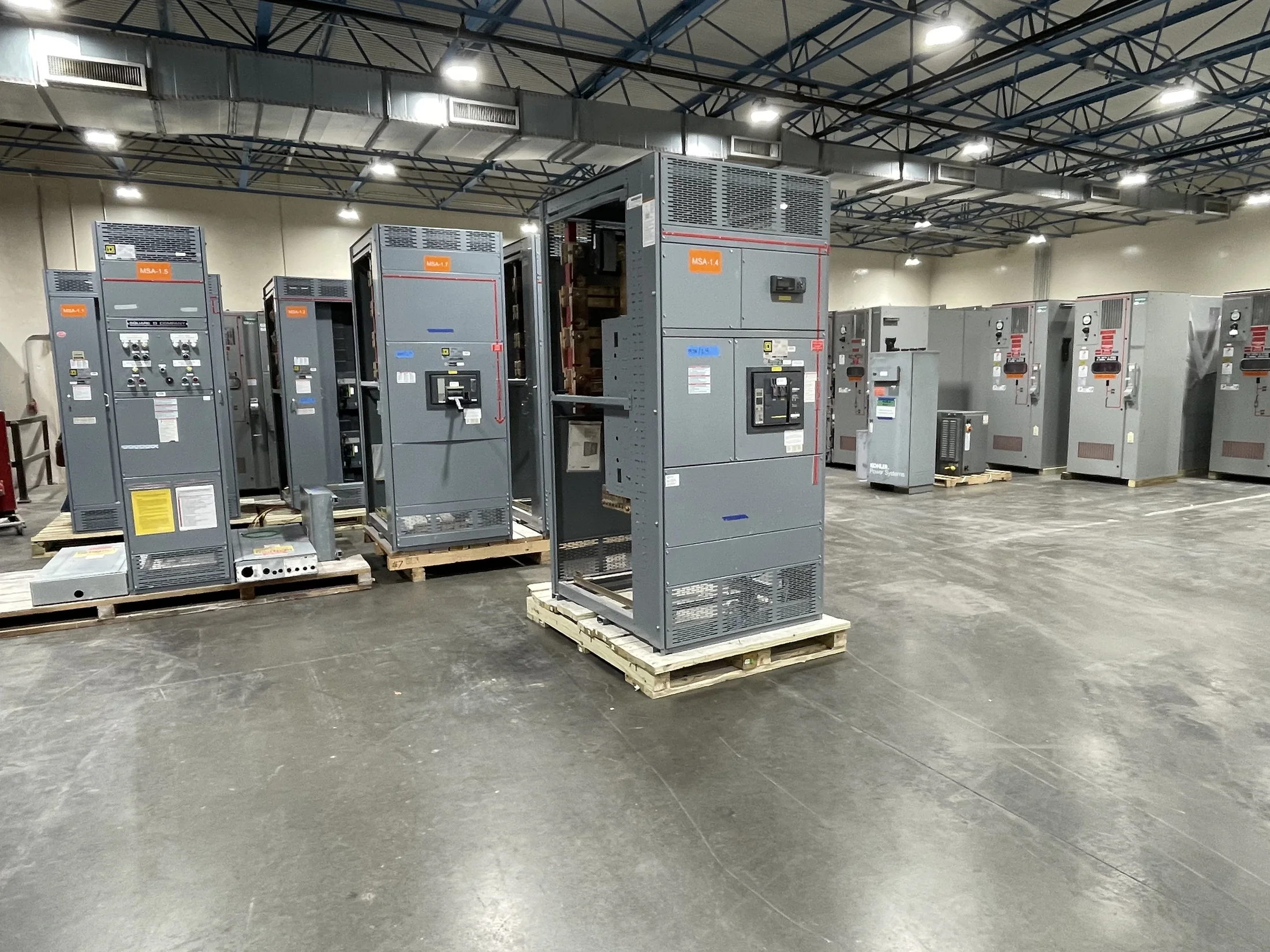
Once requirements are gathered, the electrical engineer should incorporate them into the one-line diagram, equipment specification, and project notes. Identify the intended equipment type and applicable standard: UL 891 applies to low-voltage switchboards, while UL 1558 applies to low-voltage switchgear. Neither standard establishes medium-voltage equipment requirements.
For medium-voltage equipment, specify the applicable voltage class, switching and protection functions, interface needs, and project requirements for review. Confirm ratings, construction, listing or certification expectations, and approval process for the actual design rather than assuming every build has identical features. The engineer, utility, and authority having jurisdiction should review items within their responsibility.
Provide complete information when requesting a quote
A useful quotation package includes the latest utility response, one-line diagram, service voltage, phase, frequency, available fault current, equipment type, required ratings, metering details, connection points, and project schedule. Include site constraints such as access, indoor or outdoor location, dimensions, and any environmental or installation conditions that affect the proposed configuration.
Identify open items explicitly and state who will resolve them and by when. If utility approval is pending, request a quote based on stated assumptions and flag them for later verification. This helps the manufacturer define scope, identify design questions, and avoid treating preliminary data as a confirmed requirement or guaranteed equipment configuration.
Keep approvals and revisions aligned
Utility review is not a substitute for engineering responsibility or approval by the authority having jurisdiction. The engineer should verify the design against utility criteria, applicable codes, and project conditions; the utility should confirm its connection requirements; and the AHJ should address code enforcement within its authority. Resolve conflicting comments before releasing final equipment drawings.
Record the source and revision date for utility documents, and circulate changes promptly to the engineer, contractor, owner, and equipment supplier. The manufacturer builds new equipment in the United States with American components, offers custom fabrication, short lead times, and nationwide shipping. Accurate, coordinated inputs help establish a workable scope for projects in Ohio and nationwide.