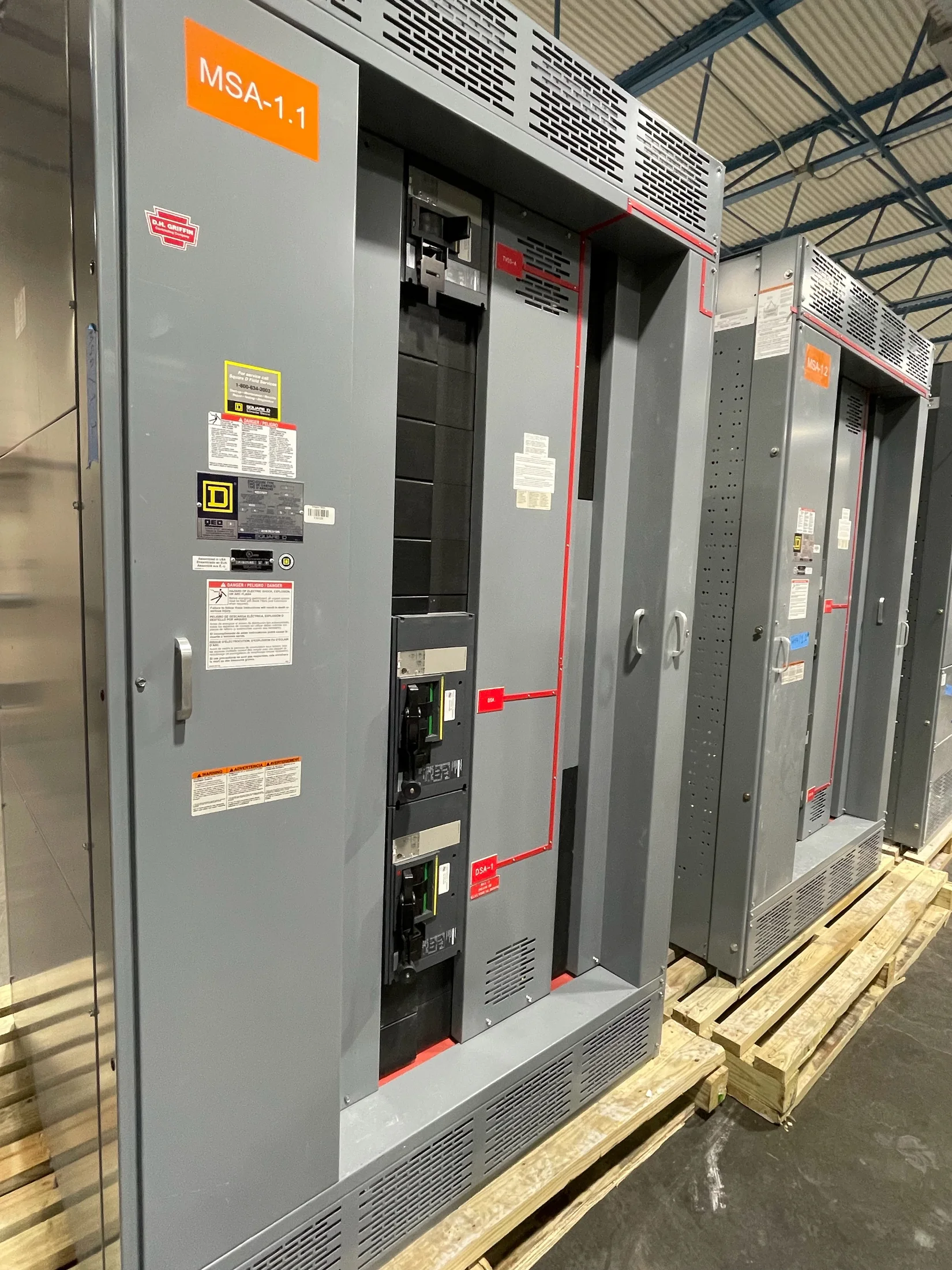
Start with the project requirements
Whether a switchboard needs a UL label depends first on the project documents. Specifications may require a listed assembly, identify a particular product standard, or establish documentation and inspection conditions. Review the electrical specifications, one-line diagram, equipment schedules, and procurement notes together; a brief reference to “UL” may not define the requirement fully.
Ask the engineer of record or project manager to clarify ambiguous language before equipment is quoted. Confirm whether the requirement applies to the complete switchboard, particular components, or an installation evaluation. Do not assume that a past project’s acceptance, or a general preference for listed equipment, settles the requirements for this installation.
Check the authority having jurisdiction
The authority having jurisdiction (AHJ) enforces applicable electrical codes and determines what evidence of suitability it will accept for the installation. Depending on the project and local requirements, that evidence may involve a listed product, inspection documentation, or an evaluation by an accepted field-evaluation body. Confirm expectations with the AHJ early, rather than after fabrication.
The utility can also impose service or metering requirements that affect the proposed equipment, although utility acceptance and product certification are separate matters. Share the service arrangement, site jurisdiction, and project specifications with the responsible engineer, utility, and AHJ as appropriate. Their review helps identify approval questions before design details become difficult to change.
Identify the equipment standard correctly
For many low-voltage switchboards, UL 891 is the relevant switchboard standard when the specified assembly is designed and evaluated to it. UL 891 applies to switchboards; it should not be used as a blanket claim for every distribution assembly or voltage class. Confirm the equipment type, intended application, and standard named in the contract documents.
Low-voltage switchgear is a distinct equipment category commonly associated with UL 1558, while medium-voltage equipment follows different standards and evaluation criteria. A switchboard, switchgear lineup, and medium-voltage assembly are not interchangeable labels. If the specification uses these terms inconsistently, request a design clarification so the quoted product and acceptance criteria match.
The exact assembly matters
A label applies to an identified product configuration, not automatically to any lineup assembled from familiar parts. Bus arrangement, voltage and current ratings, protective devices, service entrance features, enclosure, barriers, and incoming and outgoing connections can affect the evaluated design. The manufacturer must confirm that the proposed arrangement falls within the applicable construction and certification scope.
Field changes, substitutions, or combinations of sections can also raise questions about whether the finished assembly remains within its documented configuration. Provide the intended lineup and all required options before approval drawings are finalized. If site modifications are anticipated, identify them for engineering review; do not presume they preserve the original listing or label applicability.
A component mark is not an assembly label
Circuit breakers, metering devices, controls, and other components may carry their own product marks. Those marks address the components within their applicable scope; they do not, by themselves, establish that the complete switchboard has been evaluated as an assembly. Review submittals for the distinction between component identification and assembly-level certification.
Likewise, a manufacturer’s quality documentation or a statement that equipment is built to a standard is not necessarily equivalent to a UL listing or label. If the contract requires a listed assembly, ask what certification applies to the complete proposed equipment and how it will be identified. Resolve terminology in writing before purchase authorization.
When field evaluation may be considered
If a proposed assembly lacks the certification required by the project or AHJ, a field evaluation may be one possible route for review. It is not an automatic substitute for a listed product, and acceptance depends on the evaluator, installation, applicable rules, and AHJ decision. Discuss feasibility and responsibilities before relying on this approach.
A field evaluation can require access to construction details, component records, drawings, and the installed equipment. The evaluator may identify changes or documentation needs, and the project schedule must account for that process. Confirm who will arrange and pay for evaluation, when it occurs, and what acceptance documentation the authority requires.
Information to provide for a quote
A useful quote request includes the project specification, one-line diagram, equipment schedule, system voltage, available fault-current information, service conditions, and requested ratings. Include the installation location and governing jurisdiction, plus any explicit certification language. This lets the manufacturer review the intended equipment category and identify labeling questions rather than price an incomplete description.
Also provide the section lineup, main and feeder device requirements, metering and control needs, enclosure conditions, cable entry details, and known dimensional constraints. State whether the project requires a particular standard or label and provide any approved deviations. Final ratings and construction remain subject to engineering review and confirmation against project conditions.
Confirm before releasing the order
Before release, align the approved submittal, purchase order, and specification on the exact equipment type, assembly scope, and required certification. Ask who verifies the label and what records will be supplied. If the AHJ or utility has special conditions, document them in the submittal process so they are visible to the design and manufacturing teams.
A U.S. manufacturer can custom fabricate new switchboards to project requirements and ship equipment nationwide; lead time depends on the approved configuration, components, and current production conditions. Have the responsible engineer check the design, and obtain AHJ and utility confirmation where relevant. A label decision belongs to the specific project and assembly.