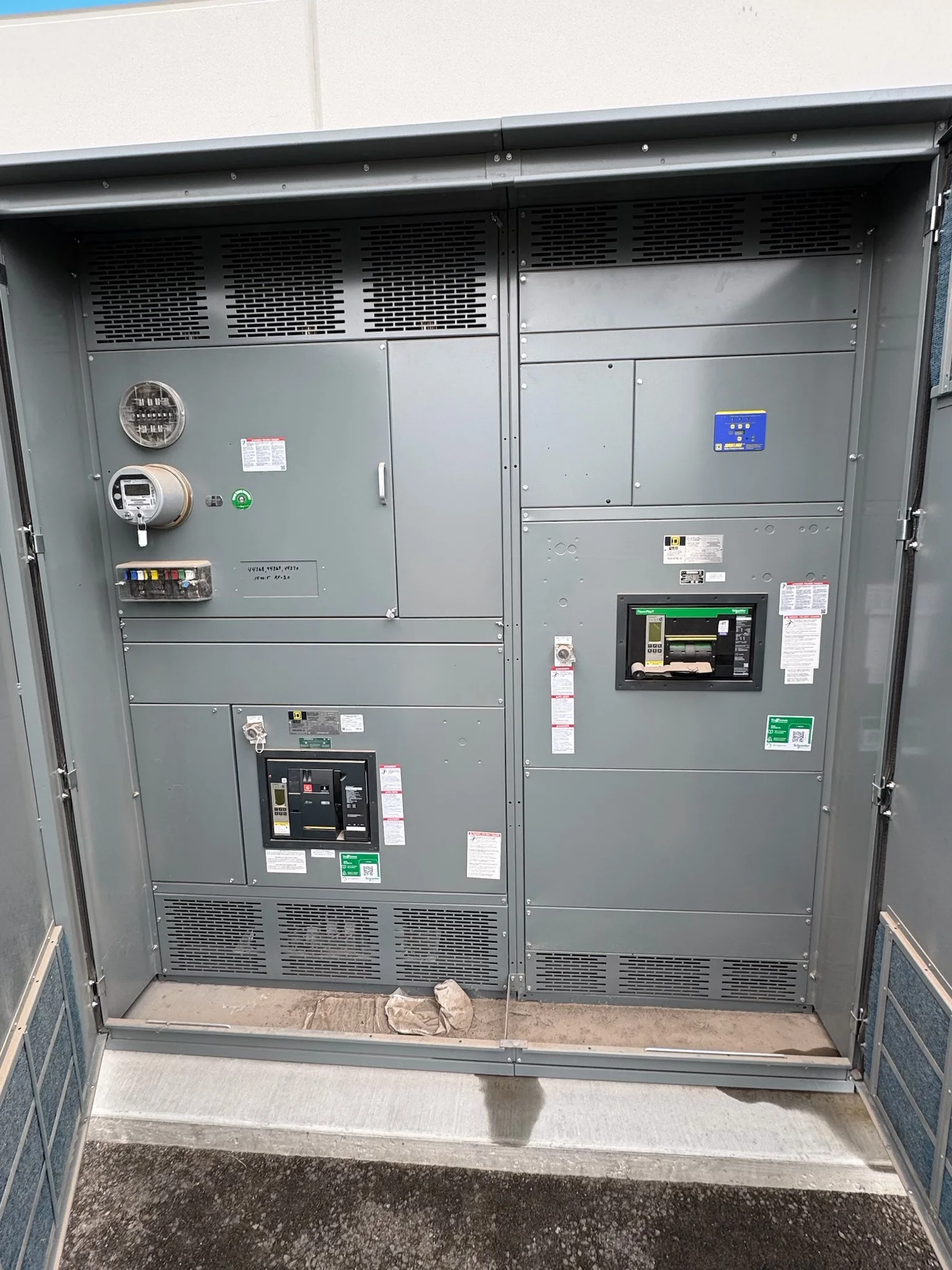
Two standards, two equipment categories
UL 891 applies to dead-front switchboards. UL 1558 applies to metal-enclosed low-voltage power circuit breaker switchgear. Both concern equipment used in low-voltage distribution, but they are not interchangeable labels for the same assembly. The applicable standard depends on the equipment’s design and construction, not simply its voltage or intended location.
A project specification may call for a switchboard, switchgear, or a particular UL standard. Clarify that choice early with the electrical engineer. Replacing one category with another can affect layout, protection, maintenance access, coordination studies and procurement documents. Neither standard covers medium- or high-voltage equipment; those systems require separate equipment classifications and requirements.
Construction and internal arrangement
A UL 891 switchboard is typically assembled as a freestanding distribution structure with sections containing buses, overcurrent devices, metering or other specified components. Its configuration depends on the service and feeder arrangement. Exact construction, accessibility and component choices must be confirmed for the proposed build; they should not be assumed from the word “switchboard” alone.
UL 1558 switchgear uses a metal-enclosed construction organized into compartments, commonly with low-voltage power circuit breakers and associated control and bus arrangements. Compartmentation and breaker features depend on the design. Confirm the required lineup, device type, access, control wiring and options against the project documents rather than treating every switchgear assembly as identical.
How application influences selection
Switchboards are commonly considered for service and distribution applications where the specified arrangement and available protection devices meet the facility’s needs. They may suit projects prioritizing a compact, straightforward distribution lineup, subject to electrical requirements and manufacturer design limits. The engineer should establish the required incoming source, feeder count, load characteristics and protective-device functions before equipment is selected.
Low-voltage switchgear may be specified where the project calls for power circuit breaker construction, a compartmented lineup or particular operational and maintenance arrangements. Those considerations do not automatically make switchgear necessary for every critical or industrial facility. Evaluate continuity objectives, switching procedures, protection, space, budget and maintenance practices together, then document why the selected equipment category fits.
Protection and coordination questions
Protection requirements can influence equipment category, device selection and arrangement. Confirm the available fault current, system voltage, source configuration, grounding method and required interrupting or withstand capabilities with the responsible engineer. Device ratings and coordination must match the system study and proposed configuration; a standard number alone does not establish that a specific build is suitable.
Ask whether selective coordination, arc-energy mitigation, ground-fault protection, metering or transfer functions are required. These are project-specific design decisions, not universal features guaranteed by either standard. Verify the selected devices and assembly documentation against the engineer’s study, applicable codes, utility requirements and authority having jurisdiction review before release for manufacture.
Space, access and installation constraints
The physical choice matters in the electrical room. Compare lineup footprint, working clearances, cable-entry direction, conductor bending space, routing and access for installation and future service. Confirm door and aisle dimensions, floor loading, delivery path and any height limits. A compact-looking one-line diagram does not prove that the completed assembly will fit the room or installation route.
For either category, provide the manufacturer with available room dimensions and site constraints early. Identify top or bottom cable entry, incoming service location, wall conditions and adjacent equipment. The responsible engineer and contractor should check required electrical working space and installation details. Field conditions, local codes and AHJ direction may change what can be installed.
Documents that settle the specification
Useful design inputs include a current one-line diagram, load and feeder schedules, service and system data, fault-current information, protective-device requirements and applicable specifications. Include control schematics or sequence descriptions when the lineup has controls, transfer equipment or interlocks. Note whether the documents explicitly require UL 891 or UL 1558, and ask the engineer to resolve conflicting language.
Also identify environmental conditions, enclosure requirements, metering needs, communications, labeling, spare provisions and any required submittal format. These details affect fabrication and component coordination. A quotation based on incomplete or preliminary information should identify its assumptions and exclusions clearly, so the buyer can compare scope without mistaking an unconfirmed option for a committed feature.
Standards are not a substitute for review
UL 891 and UL 1558 distinguish product categories; they do not replace project engineering, code review or system studies. Confirm the equipment’s intended application and the specific construction and ratings offered for the build. Do not infer that one standard means a particular fault rating, enclosure type, protective function or certification status without reviewing the actual proposed equipment documentation.
The responsible electrical engineer should check the design against the system and applicable codes. Coordinate service requirements with the utility where relevant, and submit equipment details to the AHJ as required. Confirm the manufacturer’s proposed scope and compliance documentation before purchase. This review helps keep the specification, quote, submittals and installed configuration aligned.
Preparing a manufacturer quote request
When requesting a quote for new equipment, send the one-line, specifications, load data, system voltage, available fault current, incoming and feeder requirements, preferred standard and target delivery location. Include project schedule, room and access constraints, required submittals, and any named components or approved alternates. Flag missing engineering decisions instead of presenting assumptions as settled requirements.
A U.S. manufacturer can review those inputs for custom fabrication and nationwide shipment, with lead time dependent on scope, component availability and design confirmation. Ask which details remain open and what information is needed to finalize the proposal. Before order release, reconcile the quotation with the engineer-approved design, utility conditions and AHJ requirements; confirm the equipment category explicitly.