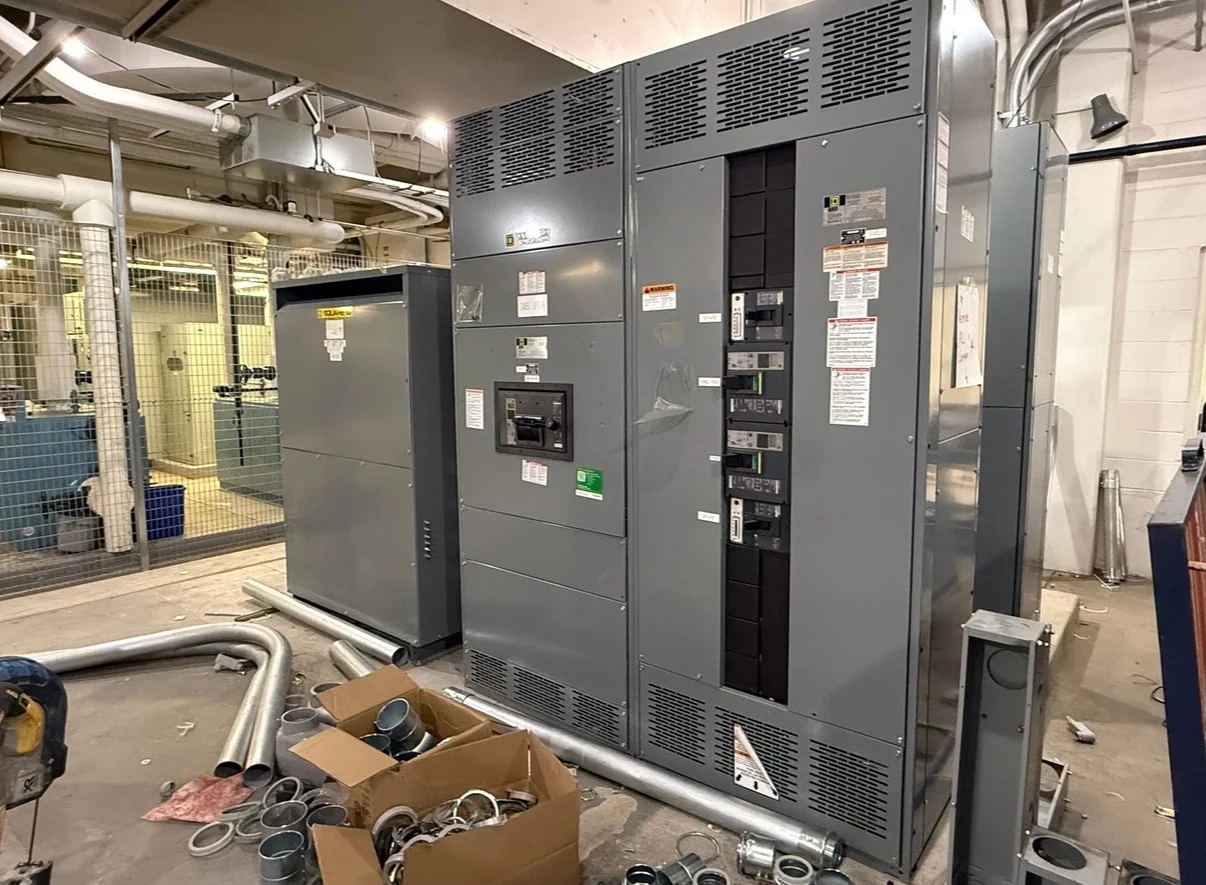
Shipping splits start with the route
A lineup that fits an electrical room may not fit the path to it. Truck and trailer dimensions, legal weight limits, bridge clearances, turning radii, and delivery-site restrictions can limit the size or mass of each shipping section. The route from the manufacturer to the receiving point matters as much as the equipment footprint.
Delivery planning should account for the full journey, including unloading and movement from the truck to the installed location. A loading dock, crane reach, elevator capacity, corridor width, door opening, or floor loading limit may become the controlling constraint. Confirm these conditions early; a split that solves highway transport may still be too large for indoor movement.
Site access can determine section dimensions
Measure the actual route into the electrical space, rather than relying only on room drawings. Record clear opening widths and heights, corridor turns, overhead obstructions, stairways, ramps, elevator interiors, and any areas where the section must be tilted or rotated. Building conditions and construction sequencing can change access after equipment dimensions are approved.
Where access is restricted, discuss feasible section dimensions before finalizing the lineup arrangement. Smaller sections may ease handling but can increase the number of field joints and assembly tasks. The project team should compare those tradeoffs with available rigging equipment, installer experience, staging space, and the time window for moving equipment through occupied or active areas.
Electrical arrangement shapes the split
A shipping split must respect the equipment’s internal arrangement. Bus connections, barriers, compartment boundaries, cable landing areas, control wiring, and the sequence of functional units all influence where sections can be separated. A division that appears convenient on a floor plan may conflict with bus layout, required clearances, or the intended installation and maintenance access.
For low-voltage applications, distinguish the specified equipment type: a UL 891 switchboard and UL 1558 low-voltage switchgear are different product categories, with different construction requirements. Medium-voltage equipment requires its own applicable design and interface review; UL 891 does not cover medium- or high-voltage equipment. The responsible engineer should verify the proposed configuration against project specifications.
Field interfaces need deliberate planning
The joining points between sections are engineered interfaces, not generic cabinet seams. Depending on the design, field work may include aligning and fastening structures, completing bus connections, reconnecting control conductors, and restoring barriers or covers. The manufacturer’s drawings and instructions should identify the intended interfaces and the assembly sequence for the specific build.
Before shipment, clarify which connections are made at the factory and which are completed at the site. Establish responsibility for rigging, alignment, torque procedures, conductor termination, inspection, and any required electrical testing. Field assembly should follow the equipment documentation and project requirements; do not assume that every split uses identical hardware or connection methods.
Protect the lineup during shipment
Sections must be prepared for the handling and exposure expected along the route. Project conditions can include outdoor staging, weather exposure, vibration, repeated transfers, and extended time before installation. Confirm packaging, protection, lifting provisions, and storage requirements for the specific equipment, and identify any restrictions on orientation or lifting points.
Plan the receiving area as carefully as the delivery route. Verify that sections can be unloaded safely, staged without blocking access, and protected from construction damage, moisture, dust, and unauthorized handling. Coordinate delivery sequence with the installation plan so sections are available in a useful order and do not need to be relocated unnecessarily.
Drawings and dimensions reduce surprises
A useful review package includes the lineup elevation, overall and section dimensions, shipping weights when available, connection locations, and the proposed division points. Compare these documents with architectural plans, structural information, door and elevator schedules, and the rigging plan. If dimensions are preliminary, mark them clearly so the team does not treat them as approved handling limits.
The project should also identify who reviews revisions and when dimensions become fixed. Changes to a lineup, room layout, or access route after approval can make a planned split impractical. Have the electrical engineer, contractor, facility representative, and relevant building or rigging personnel resolve conflicts before manufacturing and shipping arrangements are finalized.
What to provide for a quote
For a practical quote, provide the one-line diagram, equipment specification, system voltage and application, lineup arrangement, and required ratings or options. Include the installation location, delivery constraints, preferred delivery window, and any known limits on truck access, unloading, elevators, openings, floor loading, or indoor travel. Note whether sections must pass through an occupied facility.
Also provide project drawings showing the equipment room and access path, the expected installation sequence, and contact information for the engineer or contractor coordinating field assembly. Identify any requirements for factory-installed connections, field interfaces, documentation, or witness activities. These details help determine a buildable configuration and a shipping plan; final requirements remain subject to engineering review.
Coordinate design, delivery, and assembly
A sound shipping plan connects the electrical design to transportation and site logistics. Confirm the route and handling limits with the carrier and site team, then review section boundaries and interfaces with the equipment manufacturer. Custom fabrication can accommodate project-specific arrangements, but feasible splits depend on the design, transport conditions, and the installation environment.
U.S.-built equipment using American components can be configured for projects in Ohio and shipped nationwide, with lead time dependent on scope and current requirements. Before release, have the responsible engineer check the design, and consult the utility and authority having jurisdiction where applicable. Align delivery, storage, and field assembly responsibilities in the project documents.