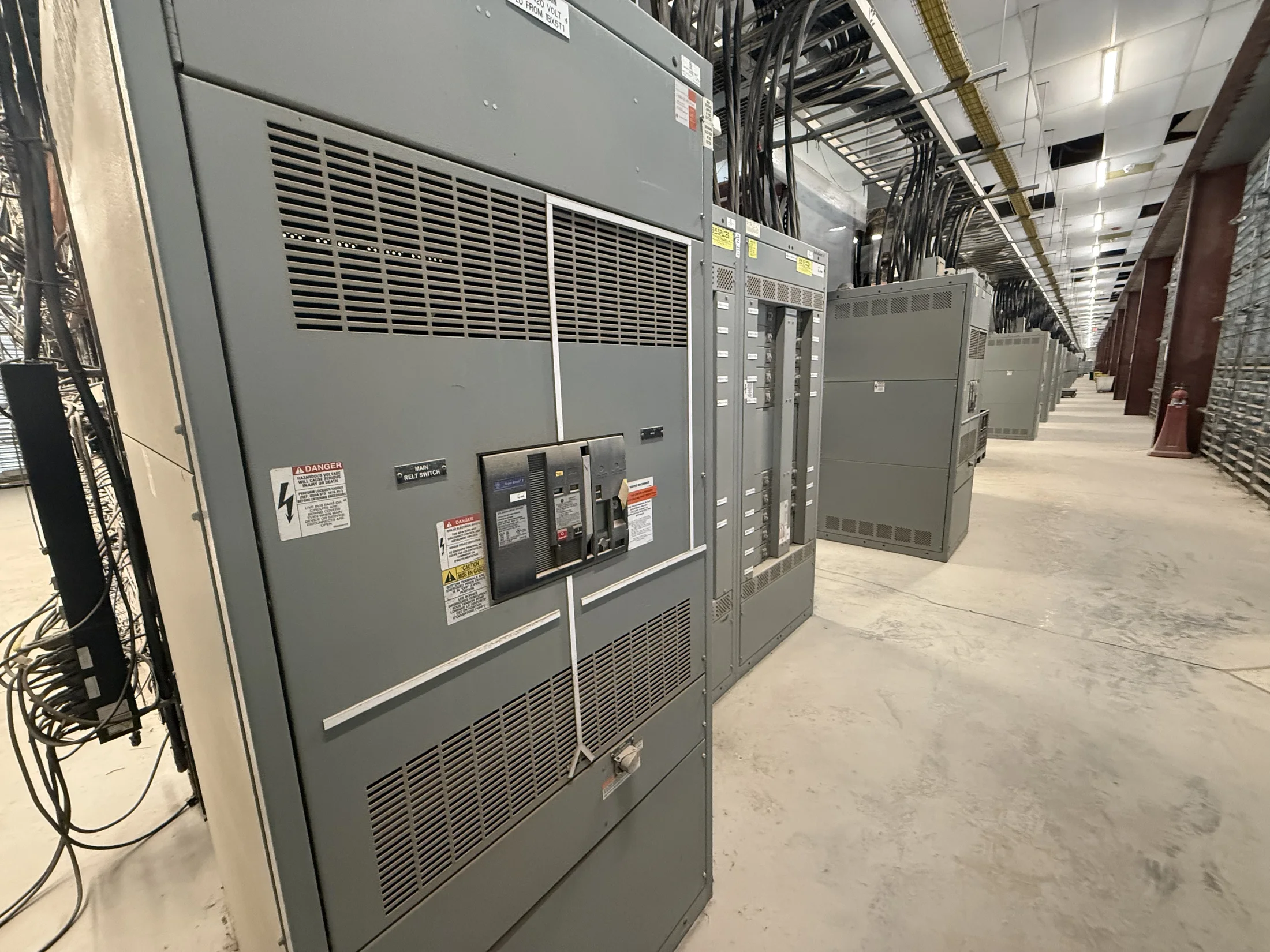
Metal-enclosed describes the broader construction
Metal-enclosed switchgear is equipment housed within a grounded metal enclosure. The term describes an overall construction category, not one uniform internal arrangement. Enclosed assemblies can serve different voltage classes and applications, with varying barriers, compartments, access provisions, and switching devices. The name alone does not establish a particular level of separation or a specific standard.
Metal-clad switchgear is a more specifically defined form of metal-enclosed equipment, commonly associated with medium-voltage applications. Its construction includes features intended to separate major functional components. When comparing proposals, identify the applicable equipment standard, voltage class, and construction description rather than treating “metal-enclosed” and “metal-clad” as interchangeable labels.
What makes metal-clad construction distinct
A central distinction is compartmentation. Metal-clad designs use grounded metal barriers to separate principal elements such as the circuit breaker, bus, and cable connections. The arrangement is intended to limit exposure between compartments during ordinary access and maintenance. Exact construction details vary by design and must be confirmed in the manufacturer’s documentation.
Metal-clad medium-voltage equipment commonly uses drawout circuit breakers, allowing the breaker to move between connected, test, and disconnected positions according to the design. Interlocks and shutters may control access or movement, but their arrangement is product-specific. Confirm these provisions, operating procedures, and maintenance clearances for the proposed equipment instead of assuming every lineup is identical.
Metal-enclosed equipment can have varied arrangements
The broader metal-enclosed category includes constructions that do not meet the specific definition of metal-clad switchgear. For example, some assemblies use fixed switching devices or provide less compartmentalization between components. Such equipment may suit an application when its design, ratings, operating method, and applicable standard align with the project requirements.
Metal-enclosed equipment is not inherently a lower-quality alternative; suitability depends on the electrical system and the intended installation. Compare device type, accessibility, maintenance approach, internal separation, and system duty. A project specification should state the required construction and standard clearly, avoiding generic enclosure language that could leave important design expectations unresolved.
Voltage class and standards must be clear
Metal-clad terminology is generally used for medium-voltage switchgear, while low-voltage switchboards and switchgear follow different product standards and construction conventions. UL 891 applies to switchboards; it does not define medium- or high-voltage metal-clad equipment. Low-voltage switchgear may be specified to UL 1558, subject to the design and applicable listing.
Do not infer a standard or voltage rating from the enclosure’s appearance or a sales description. Confirm nominal system voltage, insulation requirements, frequency, grounding method, and the governing project specification. The responsible engineer should determine which equipment class and standard apply, with utility and authority having jurisdiction review where required.
Match construction to operation and maintenance
The choice affects how operators isolate equipment and how maintenance is planned. A drawout breaker arrangement can support removal or testing procedures without disturbing fixed bus connections, but it also requires suitable handling practices, storage, and clearances. Fixed-device arrangements have different access and outage implications. Evaluate the actual operating sequence and maintenance resources.
Consider who will operate the lineup, how often switching is expected, and what isolation boundaries the facility needs. Review access from the front or rear, cable entry, room layout, and provisions for future work. These are design decisions, not automatic benefits of a metal-clad label; request drawings and product-specific operating information.
System duty and physical configuration guide selection
The equipment must be coordinated with the electrical system’s load, fault duty, protection scheme, and grounding arrangement. Required ratings and interrupting capabilities depend on system studies and the devices selected. Do not assume a metal-clad configuration inherently provides a particular rating, arc-resistant construction, or protection feature; specify and verify each project requirement.
Lineup configuration also depends on incoming and outgoing circuits, bus arrangement, metering, relaying, control power, and connection locations. Room dimensions, cable bending space, access routes, environmental conditions, and seismic or other site requirements may influence fabrication. The engineer should reconcile these constraints with the equipment drawings before release for manufacture.
Prepare a complete request for quotation
For a useful quote, provide the one-line diagram, equipment schedule, project specifications, system voltage, frequency, and available fault-current information. Include required standards, device types, bus arrangement, circuit quantities, control and protection requirements, metering, and any specified compartmentation. Identify the installation location and relevant utility or owner criteria.
Also share room plans, cable entry preferences, dimensions, environmental conditions, desired delivery window, and applicable inspection or documentation requirements. State whether the project calls for metal-clad medium-voltage switchgear or another metal-enclosed assembly. If requirements are not settled, identify open decisions so they can be reviewed before the design is finalized.
Confirm the specified build before procurement
A specification review should check terminology against the intended equipment standard and application. Confirm the proposed construction, breaker arrangement, compartment boundaries, access, interlocks, ratings, and required options in the submittals. The responsible engineer should verify coordination with the system design, and the utility or AHJ should review matters within its authority.
A U.S. manufacturer can build new switchgear and power distribution equipment with American components, custom fabrication, short lead times, and nationwide shipping. Availability and schedule depend on the project scope and confirmed requirements. Request a configuration-specific proposal and review its drawings and documentation before approving the equipment for manufacture.