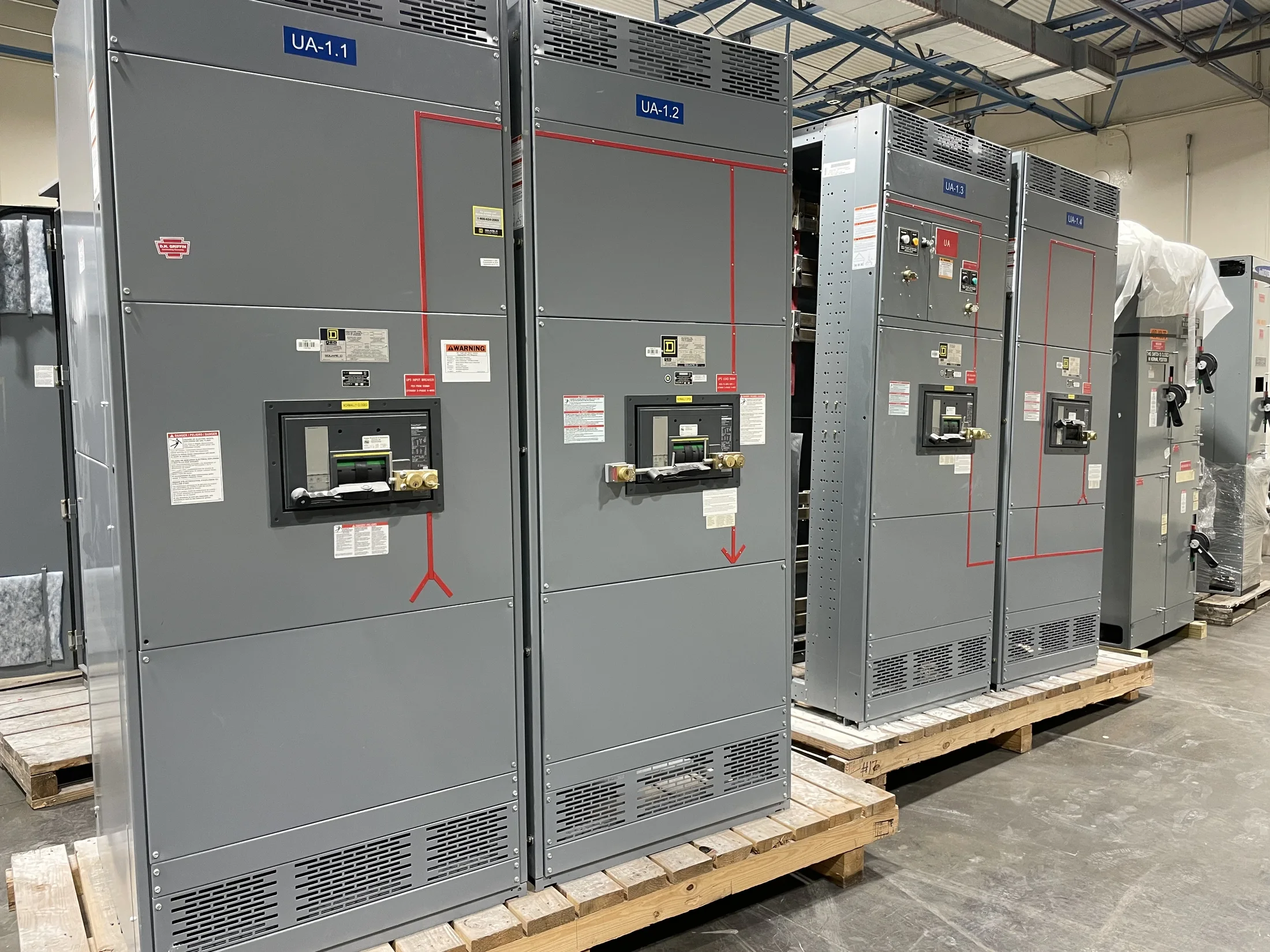
Start with a reliable equipment identity
Record each lineup’s manufacturer, model or product family, serial number, manufacture date when available, and equipment name or tag. Include the facility location, voltage class, and the lineup’s role in the distribution system. These identifiers help maintenance staff match records to the actual gear rather than relying on a room name or an outdated label.
For multi-section assemblies, map section numbers and cubicle designations to the installed arrangement. Capture nameplate data and photographs when site procedures permit, while protecting sensitive information. If a nameplate is damaged or a configuration is uncertain, document the uncertainty and have qualified personnel verify it before ordering parts or planning work.
Keep drawings aligned with the installation
Maintain current as-built one-line diagrams and wiring, elementary, and connection drawings applicable to the equipment. The one-line should show sources, buses, protective devices, and connected loads at a level useful for the facility’s operating and engineering procedures. Mark revisions, dates, and approval status so users can distinguish controlled drawings from field notes.
Compare documents with the installed lineup after modifications, feeder changes, control updates, or utility work. Record deviations for engineering review; do not assume an old drawing remains accurate because the enclosure or lineup appears unchanged. For a replacement or expansion quote, drawings and field-verified dimensions help define interfaces, but the responsible engineer must confirm design requirements.
Document protective-device settings and logic
Keep a controlled record of relay, trip-unit, and other protective-device settings, including device identification, firmware or model information where relevant, setting groups, and the date and authorization for each change. Store the approved coordination or protection study with the settings so maintainers can understand their basis, rather than treating values as independent instructions.
Record control logic, interlocks, alarm functions, and communication parameters when they affect operation or troubleshooting. Access should follow facility cybersecurity and safety practices. Before changing a setting, confirm the installed device and approved study; replacement devices may use different menus, ranges, or behavior, requiring engineering review rather than a direct copy.
Preserve test and commissioning records
Retain commissioning and acceptance documentation, including the equipment covered, test date, procedures or standards used, test instruments when recorded, results, exceptions, and corrective actions. Keep later inspection and maintenance test reports with this baseline. A trend across comparable tests can be more useful than a single result, provided methods and conditions are understood.
Clearly distinguish factory documentation from site acceptance tests and periodic maintenance results. Record who performed or reviewed the work and whether the equipment was returned to service. Test scope depends on equipment type, condition, operating history, and site requirements; maintenance staff should use qualified personnel and applicable procedures, not infer a universal interval from a prior report.
Retain maintenance instructions and service history
Keep the instructions that apply to the specific switchgear family and installed devices, including inspection guidance, operating limitations, lubrication or adjustment instructions where applicable, and parts identification. Verify document revision and applicability before use. Generic instructions may omit differences in construction, accessories, or device generations that matter during a maintenance task.
Log inspections, cleaning, repairs, component changes, abnormal conditions, and return-to-service checks. Include dates, equipment tags, work scope, findings, parts installed, and follow-up actions. A concise event history helps teams recognize recurring issues and plan outages. It does not replace the site’s safety program, equipment-specific instructions, or engineering assessment of a defect.
Include ratings, configuration, and interface details
Preserve nameplate ratings and configuration details that govern application, such as system voltage, current ratings, interrupting or withstand information shown on the equipment, bus arrangement, enclosure details, and installed options. Record breaker or switch type, frame and trip information, instrument transformers, and control power details when present and verified.
These details are essential when evaluating modifications or newly manufactured replacement equipment. The correct design depends on the system study, available fault current, utility requirements, installation conditions, and applicable codes—not on a visual match alone. Confirm which values are documented facts and which still require field verification or responsible-engineer review.
Control access, revisions, and record retention
Assign an owner for each record set and define how revisions are reviewed, approved, distributed, and archived. Keep a clear current version available to authorized operators and maintenance personnel, with superseded copies marked or withdrawn to prevent accidental use. Follow facility policies for retention, backups, access controls, and sensitive electrical-system information.
Use a consistent naming scheme tied to equipment tags and drawing revisions, and capture changes promptly after approved work. If electronic records are used, confirm that staff can retrieve them during planned maintenance and abnormal events. A document register can identify missing items without suggesting that every site has the same retention rules or record platform.
Use records to scope a new-equipment quote
When requesting a quote for newly manufactured switchgear or distribution equipment, provide equipment identifiers, current one-lines and relevant drawings, verified ratings, dimensions, cable or bus interfaces, device and control requirements, and known site constraints. Identify the intended application, quantity, delivery destination, and whether the request concerns a replacement, addition, or new installation.
A U.S. manufacturer building with American components can use this information to assess custom fabrication, lead-time expectations, and nationwide shipping requirements. Final scope may still depend on engineering review, utility coordination, and AHJ requirements. UL 891 applies to switchboards; UL 1558 addresses low-voltage switchgear, while medium-voltage equipment follows different standards and design considerations.