Start With the Actual System Voltage
A 347/600 V designation describes a system with 600 V between phases and, where a neutral is provided in a grounded wye configuration, 347 V from phase to neutral. Consider equipment for this system only when project documents, utility information, or verified site measurements support that voltage arrangement.
Do not treat “600 V” as interchangeable with a 600 V line-to-neutral system or infer the grounding method from a label alone. Ask the electrical engineer or facility representative to confirm nominal voltage, frequency, phase count, grounding, and whether the neutral is required for connected loads.
Verify That the Voltage Is Locally Applicable
A 347/600 V system is commonly associated with Canadian installations, but its use and acceptability depend on the project’s location, governing electrical rules, utility service, and authority having jurisdiction. For a US project, confirm that the proposed service voltage is available and permitted before selecting equipment or requesting a build.
Utility service standards and local code requirements can affect whether this voltage is practical for a new installation, an expansion, or a facility with existing distribution. The responsible engineer should resolve jurisdictional questions with the utility and AHJ. A voltage label by itself does not establish local approval or equipment suitability.
Match Equipment to Its Intended Function
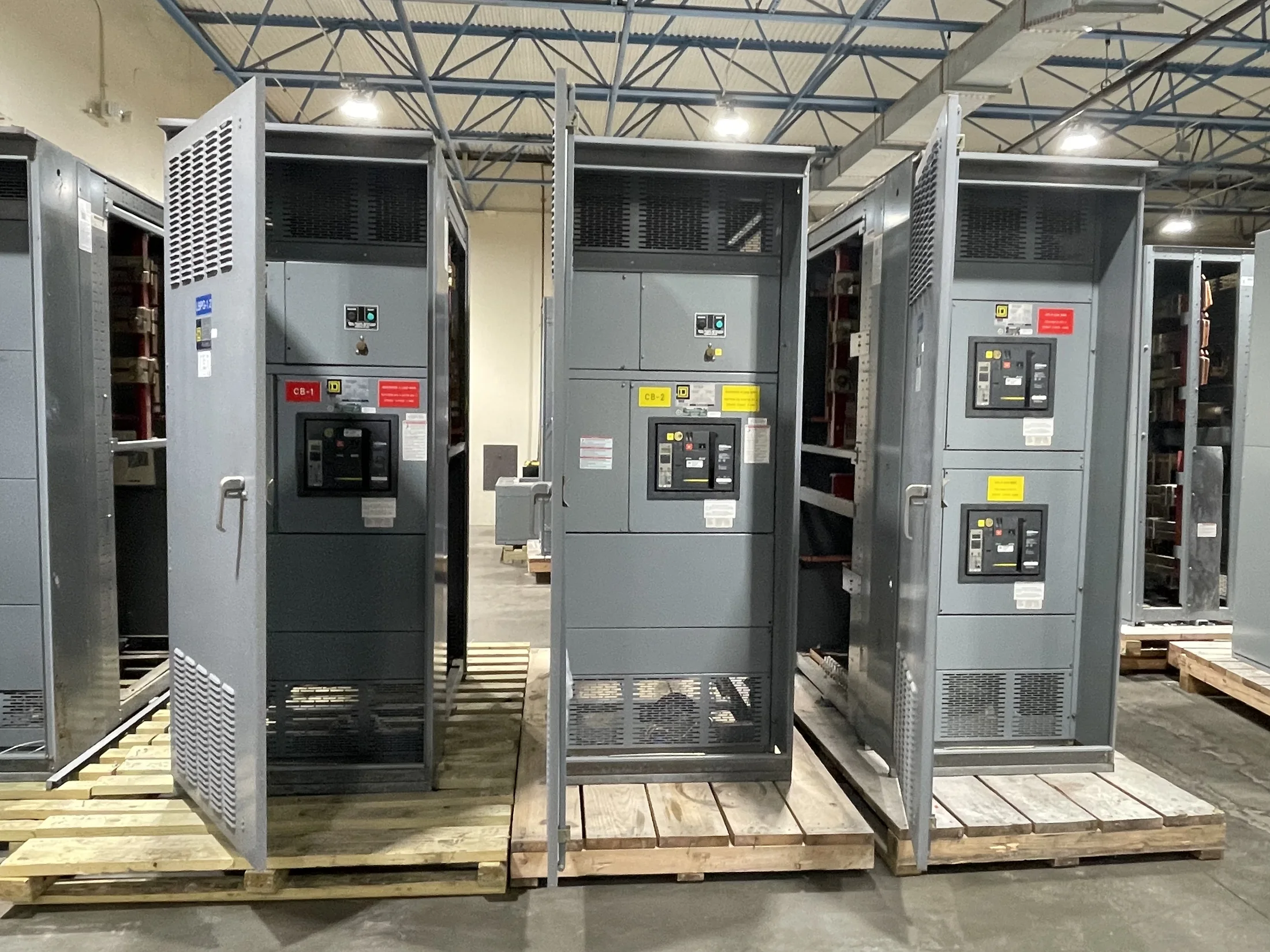
Identify whether the requirement is for a switchboard, low-voltage switchgear, panelboard, transformer, or another assembly. UL 891 switchboards and UL 1558 low-voltage switchgear are distinct equipment categories; the application, construction, ratings, and project specification determine which is appropriate. Medium-voltage equipment is a separate class and is not covered by UL 891.
Specify the assembly’s role in the one-line diagram: service entrance, distribution, motor control, or another function. The required equipment type, short-circuit rating, protective devices, metering, and construction must be confirmed for the particular project. Do not assume that a voltage match alone establishes suitability or a specific listing for a custom build.
Check Phase, Neutral, and Load Needs
Prepare a load schedule that distinguishes three-phase loads operating at line-to-line voltage from loads using 347 V phase-to-neutral. Confirm the number and balance of circuits, neutral loading, anticipated demand, motor starting conditions, and any nonlinear loads that could affect conductor or neutral requirements.
Also identify loads whose nameplates, controls, or supplied equipment specify a different voltage. A facility may need transformation or other coordinated distribution to serve them. The engineer should determine transformer ratios, connections, grounding, overcurrent protection, and any effects on fault current; these choices should not be inferred from the 347/600 V designation.
Confirm Ratings and Protection Coordination
Equipment selection requires more than nominal voltage. Provide the available fault current at the installation point, source information, protective-device requirements, and coordination criteria. Confirm interrupting and withstand ratings, bus ratings, and any required selective coordination or arc-energy study against the actual system and applicable specifications.
Fault current may change with utility contributions, transformers, generators, motors, or future system modifications. The engineer should establish the design basis and verify that the proposed assembly and devices are appropriate for it. Do not assume a standard rating, protective-device family, or performance feature without reviewing the project’s electrical study and procurement documents.
Account for Site and Installation Conditions
Document indoor or outdoor location, ambient conditions, contamination or moisture exposure, elevation where relevant, and available floor space. Record access routes, working clearances, cable entry direction, conductor sizes, bend space, and the positions of existing feeders or adjacent equipment. These details can affect enclosure selection, layout, and fabrication feasibility.
For retrofit or phased work, provide photographs and dimensioned drawings where available, plus outage constraints and interface details. Confirm equipment anchorage, seismic or environmental criteria when specified, and how the assembly will be handled and installed. These are project-dependent requirements; the design team should determine which apply rather than presume a universal configuration.
Prepare the Information for a Quote
A useful quote request includes the one-line diagram, equipment schedule, applicable specification, voltage and grounding details, bus and fault-current requirements, device list, metering needs, enclosure conditions, and shipping destination. Include requested standards or certifications and state whether drawings, submittals, or specific documentation are required for review.
Clarify quantities, delivery expectations, project milestones, and any approved alternates or restrictions. If documents conflict—for example, one calls for 347/600 V while another shows a different service—identify the discrepancy before release. The manufacturer can review the supplied scope for fabrication questions, but design decisions remain subject to engineer, utility, and AHJ review.
Review the Design Before Releasing Equipment
Before ordering, reconcile the final equipment schedule with the approved one-line diagram, utility service conditions, load calculations, protection studies, and site interfaces. Verify voltage, phase, grounding, neutral arrangement, ratings, device functions, and connection details. Changes to any of these inputs can affect equipment configuration, cost, schedule, and coordination with other systems.
A US manufacturer can build new switchgear and power distribution equipment to project-specific requirements, with custom fabrication and nationwide shipping; confirm scope and lead time for the actual order. Do not treat general product descriptions as project approval. Have the responsible engineer check the design and obtain utility and AHJ acceptance where required before installation.