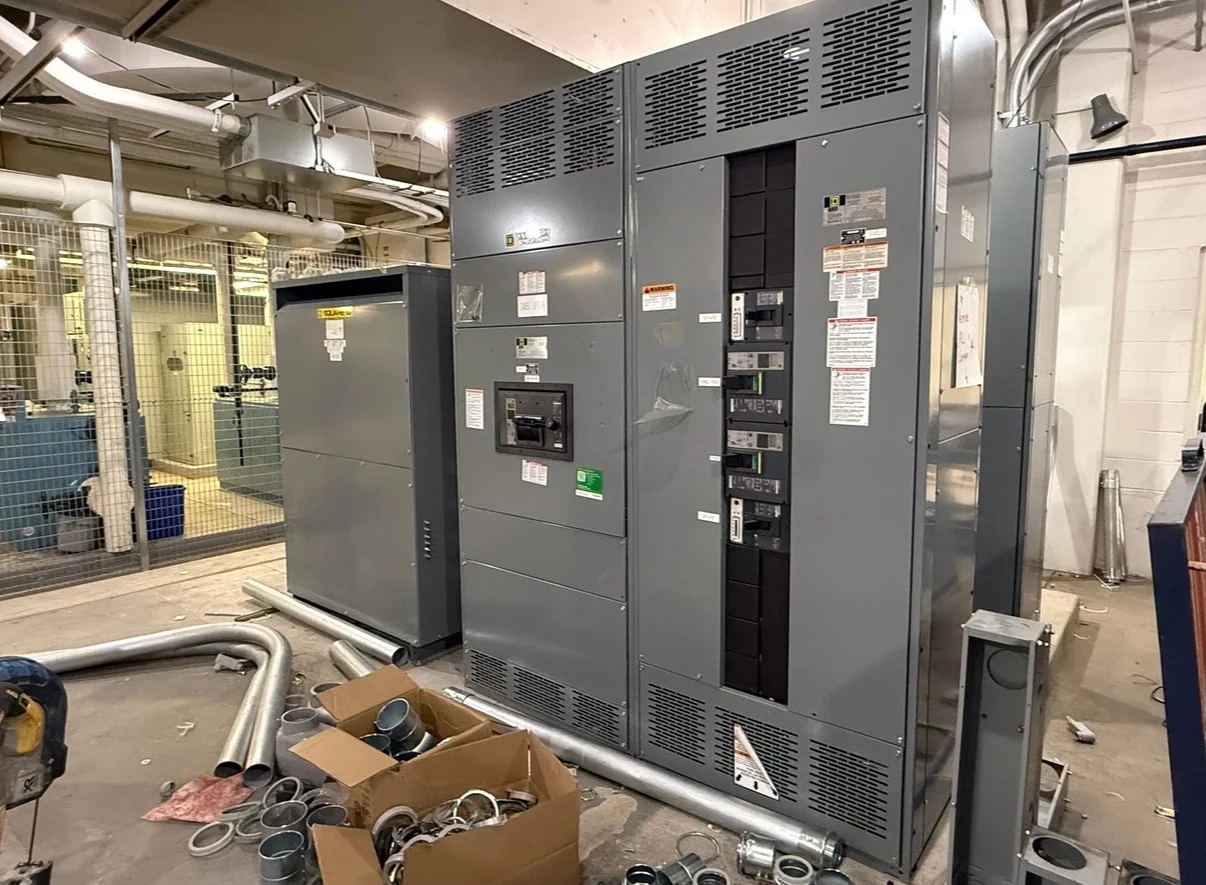
Start with the Equipment Category
Standards selection starts by identifying what the equipment is and where it sits in the electrical system. A low-voltage switchboard, low-voltage switchgear lineup, and medium-voltage assembly are different equipment categories; their construction standards, ratings, and evaluation paths are not interchangeable. Define the nominal voltage, distribution role, and intended installation before naming a standard.
For low-voltage distribution, UL 891 applies to switchboards, while UL 1558 applies to low-voltage switchgear. Neither standard is a medium- or high-voltage standard. Medium-voltage equipment requires a separate review of applicable product standards and project requirements. The responsible engineer should confirm the category and governing documents with the owner, utility, and authority having jurisdiction as appropriate.
Separate Product Standards from Installation Rules
A product standard addresses construction and evaluation criteria for a defined equipment type; it does not replace installation requirements or the project’s engineering design. Applicable electrical codes, utility service rules, owner specifications, and site conditions may add requirements. Identify which documents govern the equipment itself and which govern its selection, installation, coordination, and acceptance.
Jurisdiction, occupancy, service arrangement, and project scope can affect which code editions or local amendments apply. Do not assume a requirement from a prior facility or another state transfers unchanged. Ask the electrical engineer or project authority to identify applicable code editions, utility criteria, and owner standards, then record conflicts or exceptions for resolution before equipment design proceeds.
Define Ratings from System Conditions
A standards designation alone does not establish that a specific assembly suits a system. The scope should identify nominal system voltage, frequency, phase and wire arrangement, continuous current needs, and available fault current at the equipment location. Confirm the required short-circuit or withstand rating and any protective-device limitations using the project’s fault-current study and coordination design.
Environmental and operating conditions matter as well. Confirm indoor or outdoor use, ambient conditions, elevation where relevant, enclosure requirements, access, and expected loading. Specify service entrance duties, metering, grounding, and transfer or tie functions only when required by the design. These inputs allow a manufacturer to assess a proposed configuration without assuming ratings or features that the project has not established.
Check the Evidence Against the Exact Build
Request evidence that corresponds to the equipment category and the project’s stated requirements. Depending on the scope, that may include a proposed bill of materials, drawings, rating information, applicable certification or listing documentation, and records of required inspections or tests. Verify the document’s scope, edition, and limitations; a generic product sheet is not proof that every custom configuration meets every specification.
Review the evidence against the actual lineup arrangement, devices, enclosure, and ratings being quoted. Changes to bus, protective devices, compartments, or service configuration can affect the compliance basis and review. Ask which requirements are covered by the manufacturer’s documentation and which require project engineering or third-party evaluation. Do not treat a requested certification or test as confirmed until its applicability is documented.
Resolve Specification Gaps Before Release
Project specifications may cite different standards, editions, or terminology than the equipment schedule. Build a compliance matrix listing each requirement, its source, the proposed response, and any open question or exception. This makes it easier for the engineer, contractor, owner, and manufacturer to distinguish mandatory requirements from preferences and to assign responsibility for decisions.
If documents conflict, do not silently select the least demanding interpretation or imply that all requirements can be met. Identify the affected equipment and request written direction from the responsible project party. Confirm approved deviations before drawings are released for fabrication. This step is especially important when a specification combines switchboard language with switchgear requirements or calls for ratings that have not been established by system studies.
Treat Customization as a Verification Step
Custom fabrication can address project-specific layouts and distribution needs, but customization does not automatically establish compliance. Confirm that the proposed arrangement remains within the applicable product standard’s scope and that the selected components, ratings, and construction are supported by the required documentation. Where a project calls for a special feature, define its function and acceptance criteria rather than relying on an informal label.
Review arrangement drawings and component schedules for practical constraints: room dimensions, cable entry, working clearances, conduit locations, equipment access, and interfaces with upstream or downstream systems. Confirm shipping splits and site assembly responsibilities if they affect the final configuration. The responsible engineer should check that the drawings reflect the approved one-line diagram, coordination decisions, and installation constraints before authorization to build.
Plan Tests, Inspections, and Acceptance
Testing and inspection requirements should be stated for the particular build, not inferred from a standard name. The specification may call for factory inspections, routine tests, witness points, documentation packages, or field acceptance checks. Confirm what applies, who performs or witnesses each activity, what records will be supplied, and whether notice or scheduling requirements affect the project timeline.
Factory evidence and field verification serve different purposes. A documented factory test does not replace correct installation, site checks, or commissioning required by the project. Establish acceptance criteria before purchase and clarify how nonconformances, approved changes, and final drawing updates will be handled. The engineer, contractor, owner, and AHJ should align on responsibilities rather than presume one party’s records satisfy every requirement.
Prepare a Quote-Ready Compliance Scope
For a useful quotation, provide the one-line diagram, equipment schedule, applicable specification sections, system voltage and fault-current information, and the required equipment category. Include desired lineup arrangement, incoming and outgoing connection details, metering and protective-device requirements, enclosure and environmental conditions, and any named standards or code editions. Mark unresolved items clearly instead of presenting assumptions as approved design inputs.
A U.S. manufacturer building new equipment with American components can review that scope, identify information gaps, and discuss custom fabrication and nationwide shipping. Short lead times may be available, but timing depends on configuration, component availability, engineering review, and approvals. Before release, have the responsible engineer verify the design, and confirm utility and AHJ requirements where applicable.